As an established pioneer in heavy industrial fabrication, Nordstone stands at the forefront of premier utility & support systems manufacturers in italy, delivering engineering-grade, high-performance auxiliary infrastructure for critical process environments.
Designed to guarantee the operational integrity, safety, and continuous uptime of primary plant infrastructure, our heavy-duty process utility blocks provide essential processing lines for sectors where fluid management precision is non-negotiable—including petrochemical refining, heavy manufacturing, marine defense, and large-scale chemical processing.
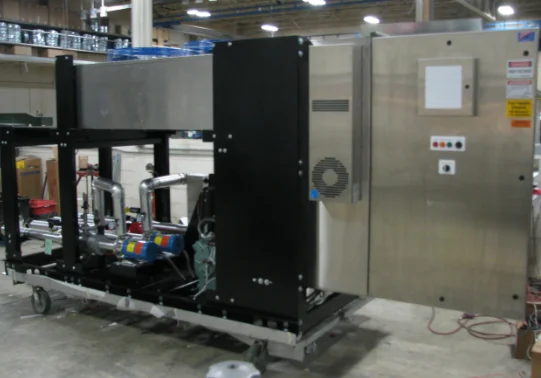
Drawing on over 20 years of expert engineering experience, our team specializes in the mechanical design and modular fabrication of auxiliary equipment arrays, including high-capacity deaerators, fuel gas conditioning blocks, chemical dosing skids, blowdown recovery systems, and industrial water treatment installations optimized for seamless integration.
Our state-of-the-art manufacturing facility combines advanced welding automation with premium metallurgy to construct robust, skid-mounted utility arrays that withstand severe thermal stress, extreme pressures, and corrosive ambient environments.
Every auxiliary support package is engineered as a fully integrated, pre-tested structural block featuring certified piping manifolds, precise instrumentation loops, high-efficiency pumping units, and smart automation panels designed for rapid plug-and-play plant deployment. By maintaining uncompromising compliance with critical international and European engineering benchmarks—including ASME Section VIII, EN 13445, CE marking, and the European Pressure Equipment Directive (PED 2014/68/EU)—Nordstone guarantees unmatched structural longevity, operational reliability, and absolute safety for Italy’s vital energy and manufacturing infrastructures.
To collaborate with our senior mechanical engineering team on your custom process utility parameters or to request a detailed technical proposal, please visit our contact page.
Technical FAQ (Top 15)
Q1: What systems are included in Nordstone’s “Utility & Support Systems” portfolio?
Our portfolio encompasses all critical auxiliary infrastructure required to support primary process vessels and thermal plants. This includes thermal and vacuum deaerators, fuel gas conditioning skids, chemical injection and dosing units, blowdown heat recovery packages, condensate return systems, and specialized industrial filtration modules.
Q2: What major manufacturing codes and certifications govern your utility systems in Italy?
All Nordstone utility and support skids are manufactured to rigid global safety mandates. For projects in Italy and across Europe, our pressure vessels and interconnected piping carry the CE marking in strict compliance with the Pressure Equipment Directive (PED 2014/68/EU) and EN 13445. We are also fully certified to apply ASME Section VIII stamps for international configurations.
Q3: Why is a modular skid-mounted utility system preferable to field-erected packages?
Modular skids are completely fabricated, wired, and tested inside our controlled manufacturing facility. This approach eliminates field assembly errors, drastically reduces on-site construction timelines, ensures superior weld quality via automated positioning equipment, and lowers overall project commission risk.
Q4: How does Nordstone approach metallurgy for aggressive chemical dosing skids?
Material integrity is core to our design process. For highly corrosive chemical injection lines (such as biocides, acids, or oxygen scavengers), we bypass standard carbon steels in favor of premium corrosion-resistant materials, including 316L Stainless Steel, Duplex, Super Duplex, Hastelloy, and titanium alloys.
Q5: What is the purpose of an industrial deaerator skid in a process plant?
An industrial deaerator mechanically removes dissolved gases—specifically oxygen and carbon dioxide—from boiler feed-water. By reducing dissolved oxygen levels down to less than 7 parts per billion (7 ppb), our systems prevent catastrophic pitting corrosion and extend the structural lifespan of high-pressure boiler tubes and piping.
Q6: Can your utility and support systems be deployed in explosive or ATEX-rated zones?
Absolutely. Leveraging our extensive background in the defense and Oil & Gas sectors, we routinely engineer fully ATEX-certified utility packages for Zone 1 and Zone 2 hazardous areas. This includes integrating explosion-proof electrical enclosures (Ex d), intrinsically safe control loops (Ex i), and flameproof instrumentation.
Q7: What automation and control architectures are supported by your utility skids?
Our utility modules feature dedicated control panels utilizing open-architecture PLCs (typically Siemens S7-1500 or Rockwell Automation Allen-Bradley platforms). We program the systems to handle independent, automated loop control while feeding comprehensive telemetry to your central control room via Modbus TCP, Profinet, or Ethernet/IP.
Q8: How does a fuel gas conditioning skid protect primary gas turbines or burners?
Our fuel gas conditioning packages receive raw gas from the pipeline and perform multi-stage processing: separating liquid slugs, filtering out fine particulates down to sub-micron levels, and regulating pressure. Many skids incorporate electric trim heaters to maintain the gas temperature safely above its hydrocarbon dew point, ensuring clean combustion.
Q9: Can Nordstone handle the integration of high-pressure pumping arrays within the skids?
Yes. We integrate heavy-duty, multi-stage centrifugal, diaphragm, or positive displacement pumps from premier European manufacturers. All pumping systems are selected based on precise fluid dynamics, Net Positive Suction Head (NPSH) calculations, and required system pressure boundaries.
Q10: What non-destructive testing (NDT) protocols are implemented during auxiliary fabrication?
In strict adherence to our ISO 9001 quality systems, all pressure-containing welds and pipe joints undergo exhaustive NDT tracking. This includes 100% Radiographic Testing (RT), Ultrasonic Testing (UT), and Magnetic Particle Testing (MT). Every completed piping manifold and vessel undergoes a witnessed hydrostatic pressure test up to 1.5 times its design pressure.
Q11: How do your blowdown recovery systems optimize plant thermal efficiency?
Our blowdown recovery skids capture high-temperature wastewater drained from boilers. By routing this fluid through flash vessels and heat exchangers, we recover high-value flash steam and transfer residual heat back into the incoming boiler feed-water loop, lowering overall fuel consumption.
Q12: Do you offer Factory Acceptance Testing (FAT) at your facility in Italy?
Yes. Every utility and support system undergoes rigid Factory Acceptance Testing prior to shipment. Your engineering representatives or designated third-party inspection bodies are given complete facility access to witness electrical loop testing, PLC logic validation, hydrostatic integrity checks, and physical alignment reviews.
Q13: Which third-party inspection and classification societies do you regularly partner with?
We regularly coordinate our materials traceability, weld validation records, and safety compliance logs with premier classification bodies active in the European market, including RINA, Bureau Veritas, TÜV, and Board-certified ASME inspectors.
Q14: What baseline engineering data does your team require to draft a precise utility proposal?
To compile an accurate technical proposal, please supply the specific process function (e.g., deaeration, chemical dosing), fluid properties, required volumetric flow rates, operating pressure and temperature parameters, space constraints, and electrical area classification.
Q15: How can a project engineer or procurement manager initiate a utility system project?
You can securely upload your request for proposal (RFP), piping and instrumentation diagrams (P&IDs), or technical equipment data sheets through our corporate interface. To establish an initial technical consultation with our senior engineering team, please connect with us directly via our contact page.