High-Performance Industrial Solutions by Nordstone
The rapid scale-up of Carbon Capture, Utilization, and Storage (CCUS) infrastructure across southern Europe has positioned Italy as a pivotal Mediterranean decarbonization hub.
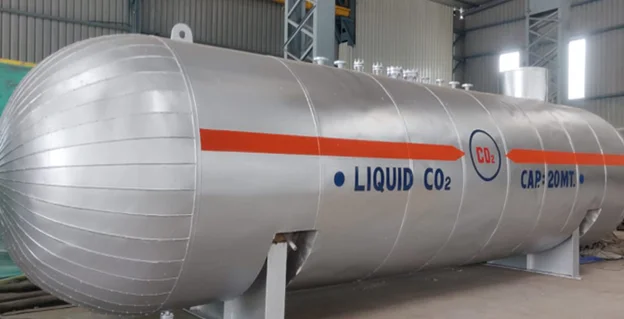
For industrial operations transitioning under modern environmental frameworks, selecting a compliant manufacturing partner is critical. Nordstone leverages 20 years of experience as premier CO₂ Storage Vessel manufacturers in Italy, delivering high-performance, custom-engineered containment systems optimized for liquid, gaseous, and supercritical carbon dioxide storage.
Operating from our state-of-the-art manufacturing facility, our expert engineering teams specialize in fabricating robust pressure vessels designed to withstand volatile thermal conditions, extreme pressures, and the complex thermodynamic behaviors inherent to heavy-duty carbon sequestration.
Every vessel we construct is engineered to alleviate the risks of cryogenic embrittlement and phase-change stress, guaranteeing absolute integrity across a product’s life cycle. Our strict adherence to global safety protocols ensures that each system is fully compliant with API, ASME Section VIII, and ISO quality standards. From heavy manufacturing to power generation, we deliver localized, certified engineering expertise that transforms ambitious carbon reduction targets into operational realities.
To explore customized storage dimensions or request a formal technical evaluation for your facility, connect with our engineering department through our Contact Us portal today.
Frequently Asked Questions (FAQ)
1. Why is Nordstone considered a preferred choice among CO₂ Storage Vessel manufacturers in Italy?
Nordstone blends over 20 years of technical expertise with a specialized understanding of European decarbonization demands. Our manufacturing systems are tailor-made to handle the volatile thermodynamic properties of captured carbon dioxide, ensuring compliance with local European and global pressure equipment directives.
2. Which industrial certifications do Nordstone CO₂ storage vessels carry?
Our engineering designs and manufacturing pipelines carry full compliance certifications under ASME Section VIII (Div 1 & 2), API 620/650 standards, and ISO 9001:2015 quality control systems. This ensures every piece of equipment meets structural safety protocols required across Italy and international jurisdictions.
3. What materials are used to construct CO₂ storage vessels to prevent low-temperature brittle fracture?
Because liquid carbon dioxide is stored at low temperatures (often down to −40∘C or lower), we utilize impact-tested carbon steels, high-strength low-alloy (HSLA) steels, and specialized austenitic stainless steels. These materials prevent cryogenic embrittlement and catastrophic cracking.
4. How does Nordstone address the specific corrosion risks associated with carbon dioxide storage?
If moisture is present, captured carbon dioxide can form highly corrosive carbonic acid. Nordstone combats this by using interior specialized corrosion-resistant alloys (CRA), advanced thermal spray aluminum coatings, and meticulous internal moisture control designs to isolate the vessel shell.
5. Can Nordstone build vessels capable of handling supercritical CO₂ storage?
Yes. Our facility is fully equipped to manufacture thick-walled high-pressure containment units capable of sustaining supercritical phases, where pressures regularly exceed 73.8 bar and temperatures surpass 31.1∘C.
6. What types of thermal insulation do you offer for liquid CO₂ vessels?
To minimize boil-off and maintain stable sub-ambient internal temperatures, we offer dual-jacket vacuum insulation with perlite filler, as well as high-density polyurethane foam (PUF) insulation with weather-proof protective cladding.
7. Does Nordstone offer custom dimensions and horizontal/vertical configurations?
Absolutely. Depending on your facility’s layout and space constraints within Italy, we design both space-optimized vertical vessels and high-capacity horizontal bulk storage tanks tailored to your specific flow rates and volumetric needs.
8. What non-destructive testing (NDT) methods do you use during manufacturing?
To guarantee structural weld integrity, 100% of our vessels undergo rigorous NDT protocols, including:
- X-ray Radiographic Testing (RT)
- Ultrasonic Testing (UT)
- Magnetic Particle Testing (MT)
- Liquid Penetrant Testing (PT)
- Hydrostatic pressure testing exceeding design thresholds.
9. How do your storage solutions integrate into carbon capture and utilization (CCU) plants?
Our vessels serve as the vital buffer storage link between the primary carbon capture system (such as amine stripping units) and the final utilization lines, such as synthetic fuel production, agricultural enrichment, or industrial manufacturing.
10. Do you provide support for regulatory approvals in Italy?
Yes. We supply comprehensive technical documentation books, design calculations, material test reports (MTRs), and third-party witness certifications necessary for local Italian authorities and environmental agency approvals.
11. What safety relief systems are built into Nordstone CO₂ storage units?
Every vessel features redundant safety infrastructures, including dual safety relief valves (SRVs) with three-way changeover valves, rupture discs, continuous electronic pressure monitoring, and integrated telemetry for automatic venting sequences.
12. Can your vessels be utilized for offshore carbon storage transport systems?
Yes. We manufacture robust, impact-resistant storage components that can be configured for maritime transportation, dockside staging, or injection terminal storage in accordance with marine classification society rules.
13. What is the typical lifespan of a Nordstone heavy-industry pressure vessel?
When operated within defined design parameters and subjected to routine inspection schedules, our industrial-grade storage units are built to achieve a functional operational lifespan exceeding 25 to 30 years.
14. How do I determine the appropriate volumetric storage capacity for my facility?
Our engineering team calculates optimal sizing based on your daily carbon capture volume, the phase state of the gas (liquid, gas, or supercritical), your logistics pickup frequency, and required emergency backup buffer periods.
15. How can I request a technical quote or a consultation for a project in Italy?
You can easily reach out directly to our project management and engineering experts through our designated Contact Us link. Provide your required operating pressure, temperature range, and volume capacity to receive a rapid, comprehensive technical proposal.