As an established pioneer in heavy industrial fabrication, Nordstone stands at the forefront of premier blast furnace gas (bfg) valves manufacturers in italy, delivering highly engineered, heavy-duty flow control and isolation solutions for the global iron and steel industry.
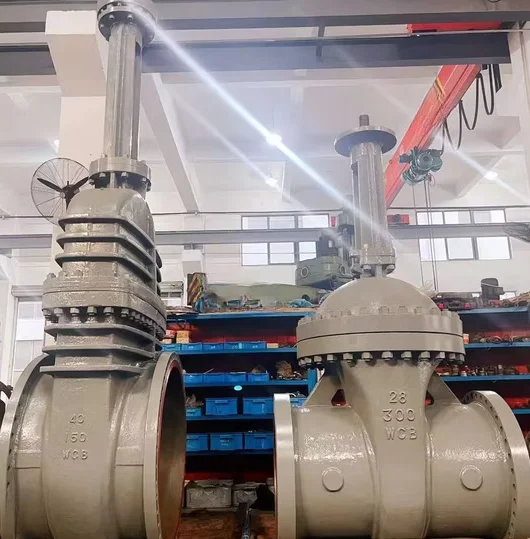
Engineered to withstand the extremely harsh, volatile, and abrasive conditions characteristic of steel mill gas cleaning and recovery networks, our robust valve configurations ensure safe, dependable operation under intense dust loading, high temperatures, and corrosive gas environments.
Drawing on over 20 years of expert engineering experience, our team specializes in the detailed mechanical design, precision manufacturing, and sealing technology of specialized BFG infrastructure components—including heavy goggle valves, three-lever isolation valves, gas butterfly valves, and high-security bleed valves optimized to maintain absolute tight shut-off during critical maintenance envelopes.
Our state-of-the-art manufacturing facility combines advanced automated welding with premium certified metallurgy to construct durable valve bodies and internal components that completely resist heavy carbon monoxide corrosion and abrasive dust erosion.
Every blast furnace gas isolation system is engineered with specialized structural reinforcements, advanced hydraulic or electric actuation packages, and self-cleaning seat configurations designed to flawlessly displace thick dust accumulations without losing sealing integrity. By maintaining uncompromising compliance with critical international and European engineering benchmarks—including API 6D, ASME Section VIII, EN 12516, CE marking, and the European Pressure Equipment Directive (PED 2014/68/EU)—Nordstone guarantees unmatched operational safety, blast furnace uptime, and structural longevity for Italy’s heavy metallurgical and energy recovery infrastructures.
To collaborate with our senior flow control engineering team on your custom blast furnace gas valve parameters or to request a detailed technical proposal, please visit our contact page.
Technical FAQ (Top 15)
Q1: What makes blast furnace gas (BFG) a challenging medium for industrial valves?
Blast furnace gas is highly volatile, toxic (due to elevated carbon monoxide levels), and heavily laden with abrasive dust particles (blast furnace dust). Valves managing BFG must operate reliably despite constant particulate accumulation, potential tar deposition, high thermal expansion forces, and the absolute requirement for zero-leakage isolation during downstream system maintenance.
Q2: What major manufacturing codes and safety certifications do your BFG valves carry?
All Nordstone BFG isolation and control valves are built to rigid global safety mandates. For installations in Italy and across Europe, our equipment carries the CE marking in strict compliance with the Pressure Equipment Directive (PED 2014/68/EU) and EN 12516 (Valves – Shell design strength). We also align fabrication with ASME Section VIII and relevant API structural standards.
Q3: Why is a goggle valve preferred for absolute isolation in BFG piping networks?
Goggle valves provide a positive mechanical spectacle-plate blind that guarantees 100% tight shut-off, making it the industry standard for protecting maintenance personnel downstream. When clamped, the solid portion of the goggle plate completely isolates the toxic and explosive gas stream, eliminating the risk of bypass leakage inherent to standard gate or butterfly valves in dirty gas service.
Q4: How does Nordstone prevent seat erosion and dust clogging within its BFG valves?
We integrate specialized hard-facing materials—such as Stellite or tungsten carbide overlays—directly onto the valve seats via advanced automated welding. Additionally, our valve bodies feature optimized flow geometries and self-cleaning or scraping mechanics that mechanically clear dust accumulation from sealing faces during the opening and closing cycles.
Q5: What type of actuation systems are available for your large-diameter BFG valves?
We supply fully integrated automation packages tailored to plant operational rules. This includes rapid-response hydraulic power units (HPUs) for three-lever or goggle isolation valves, robust heavy-duty electric actuators (such as Auma or Rotork), and pneumatic cylinders equipped with fail-safe mechanical spring returns.
Q6: Are your blast furnace gas valves certified for deployment in explosive ATEX zones?
Absolutely. Because BFG is highly flammable and forms explosive mixtures with air, all our valves, electrical actuation systems, limit switches, and positioners are fully ATEX-certified for Zone 1 and Zone 2 hazardous environments. This involves integrating flameproof (Ex d) or intrinsically safe (Ex i) components.
Q7: What metallurgy is used to handle the thermal and chemical loads of raw blast furnace gas?
We work exclusively with certified, high-tensile structural and pressure steel plates (such as P355NH or ASME equivalents). For internal components directly exposed to raw gas velocity and moisture-induced carbon monoxide corrosion, we utilize premium stainless steel alloys (316L, Duplex) or localized claddings to prevent stress corrosion cracking.
Q8: How does the “three-lever” design optimize isolation in large-diameter BFG pipelines?
The three-lever valve design uses a highly efficient mechanical linkage system to expand and retract the valve seat axially before moving the disk. This eliminates friction and rubbing on the sealing rings during operation, minimizing seal wear and significantly reducing the torque required to actuate large-diameter gas lines.
Q9: What non-destructive testing (NDT) protocols do you apply during valve fabrication?
In strict adherence to our ISO 9001 quality infrastructure, all structural welds and pressure-retaining valve shells undergo exhaustive NDT tracking. This includes 100% Radiographic Testing (RT) on critical joints, Ultrasonic Testing (UT), and Magnetic Particle Testing (MT), followed by high-pressure hydrostatic and pneumatic seat-leakage tests.
Q10: Can Nordstone manufacture large-scale BFG valves to match non-standard pipeline diameters?
Yes. Leveraging our state-of-the-art manufacturing facility and custom design engineering capabilities, we routinely fabricate bespoke BFG valves in nominal diameters extending from DN 400 up to DN 3000+ to seamlessly integrate with existing blast furnace gas main pipelines and blast furnace stoves.
Q11: How do your valve control systems interface with a steel plant’s central SCADA or DCS?
Our automated valve systems are equipped with smart field junction boxes or dedicated control blocks utilizing open-architecture PLCs. We configure the communication layers to support native industrial protocols like Modbus TCP, Profinet, or Profibus DP, providing real-time valve position telemetry, hydraulic pressure readings, and interlock tracking.
Q12: Do you offer Factory Acceptance Testing (FAT) at your facility in Italy?
Yes. Every BFG valve configuration undergoes rigid Factory Acceptance Testing prior to shipment. Your engineering representatives or designated third-party inspection bodies are given full access to witness dimensional verification, electrical loop testing, automated sequence testing, and zero-leakage pressure verification.
Q13: Which third-party inspection and classification societies do you regularly partner with?
We regularly coordinate our material traceability logs, welding procedure qualifications (WPQR), and final safety certifications with leading notified bodies active in the European heavy industrial sector, including RINA, Bureau Veritas, and TÜV.
Q14: What baseline data does your team require to draft a precise engineering proposal for BFG valves?
To compile an accurate technical proposal, please supply the nominal pipe diameter (DN), design and operating gas pressures, maximum gas temperature, dust concentration levels (mg/Nm3), preferred actuation type (hydraulic, electric, or manual), and the required installation orientation (horizontal or vertical pipeline).
Q15: How can a procurement manager or metallurgical project engineer initiate a BFG valve project?
You can securely upload your technical specifications, piping layout coordinates, or equipment data sheets through our corporate interface. To arrange an initial technical consultation with our senior flow control engineers, please connect with us directly via our contact page.