Nordstone is an industry-leading manufacturer with 20 years of experience in designing, engineering, and fabricating high-performance LOX cryogenic tanks and liquid oxygen storage vessels for critical applications across Italy.
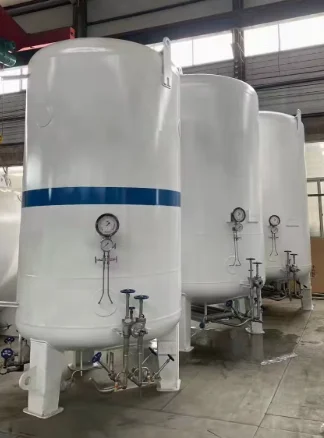
Operating out of our state-of-the-art facilities, we specialize in double-walled, vacuum-insulated pressure vessels designed to withstand extreme thermal stresses down to $-183^circtext{C}$ (the boiling point of liquid oxygen) and below. By combining advanced multi-layer insulation (MLI) and expanded perlite technologies with strict vacuum integrity tests, we achieve near-zero boil-off gas (BOG) rates. This optimizes product lifecycle costs for intensive operations in heavy industry, aerospace, medical facilities, and petrochemical processing.
Every custom containment solution we build strictly adheres to international European and global directives, including ASME Section VIII, PED 2014/68/EU, and ISO 9001 quality standards. Our expert engineering team evaluates specific seismic, thermal, and mechanical criteria to safely deploy vertical or horizontal configurations anywhere in the region.
Whether your facility supports steel mills, healthcare gas grids, or defense applications, Nordstone delivers robust structural integrity, highly automated instrumentation panels, and reliable pressure-building systems. We guarantee reliable, leak-free performance under extreme operating conditions. Contact our specialized design team via our Contact Us page to discuss your project requirements and receive a comprehensive, code-compliant engineering proposal.
Top 15 Frequently Asked Questions (FAQs)
1. What materials are used to manufacture Nordstone LOX cryogenic tanks?
Our liquid oxygen storage vessels utilize a double-walled structure engineered for maximum safety and longevity. The inner vessel, which directly holds the liquid oxygen at −183∘C, is fabricated from premium high-grade austenitic stainless steel (typically SS304 or SS316L) to prevent low-temperature brittle fractures. The outer jacket is constructed from high-strength carbon steel, protected by specialized marine-grade, anti-corrosive coatings to withstand diverse environmental factors in Italy.
2. How does Nordstone minimize boil-off gas (BOG) in its storage vessels?
We prevent heat transfer by applying a deep vacuum inside the annular space between the inner and outer vessels. This vacuum is paired with either high-performance multi-layer insulation (MLI) or high-purity expanded perlite. This creates an exceptional thermal barrier that limits radiant and conductive heat transfer, keeping product evaporation well below standard industry thresholds.
3. Which design codes and compliance standards do your tanks follow for the Italian market?
All Nordstone vessels destined for Italy are fully compliant with the European Pressure Equipment Directive (PED 2014/68/EU), harmonized EN 13445 standards, and AD 2000-Merkblatt guidelines. For global or specialized defense and oil & gas projects, we also build and stamp vessels according to ASME Section VIII Division 1 and Division 2 codes.
4. What are the available capacities for your liquid oxygen storage vessels?
We offer standard and tailored storage configurations ranging from small-footprint vertical tanks of 5,000 liters to large-scale, high-capacity industrial systems exceeding 150,000 liters. Our team optimizes layout configurations based on your facility’s spatial limits and daily consumption profiles.
5. What industries in Italy do you primary serve with LOX tanks?
With over two decades of engineering expertise, we supply critical components to a wide range of industries throughout Italy:
- Healthcare & Medical: Centralized respiratory gas networks for hospitals.
- Metalworking & Aerospace: Oxy-fuel cutting, laser processing, and rocket propulsion systems.
- Chemical & Defense: High-purity oxidation reactions and specialized defense applications.
- Water Treatment: Large-scale ozone generation for water purification plants.
6. Are Nordstone cryogenic tanks designed to handle seismic risks in Italy?
Yes. Italy has highly varied seismic zoning. Our structural engineering department carries out rigorous mechanical, wind-load, and seismic structural evaluations according to the Eurocode 8 framework. Foundation mountings, leg supports, and anchor bolts are customized to absorb localized kinetic forces without affecting vacuum performance.
7. What types of safety and relief systems are integrated into your LOX vessels?
Oxygen safety demands absolute system redundancy. Each Nordstone tank is equipped with an independent dual-safety relief valve system connected via a three-way diverter valve, allowing online maintenance without depressurizing the tank. We also integrate secondary rupture discs, vacuum thermal protection devices, and automated emergency shut-off valves (ESVs).
8. How does the integrated pressure-building system operate?
To maintain a stable discharge pressure during fluid extraction without external pumps, our vessels feature an external aluminum star-fin pressure building accumulator. This device uses ambient air temperature to vaporize a tiny stream of liquid oxygen, feeding it back into the top vapor space to safely maintain consistent operating pressures.
9. What testing methods are used to verify vacuum and weld integrity?
Every vessel undergoes extensive non-destructive testing (NDT) prior to shipment. This includes full radiographic testing (RT) of butt-welded joints, liquid penetrant testing (PT), ultrasonic testing (UT), and hydrostatic or pneumatic pressure tests. Final vacuum integrity is confirmed using high-sensitivity helium mass spectrometer leak detection down to strict helium leak rates.
10. Can these tanks be relocated, or do you manufacture ISO container options?
Beyond fixed horizontal and vertical storage models, we design and manufacture intermodal Cryogenic ISO Tank Containers (T75 classification). These systems are optimized for multimodal transport across rail, road, and marine networks, maintaining excellent thermal insulation throughout long logistics chains.
11. What cleanliness protocols do you follow for oxygen service equipment?
Hydrocarbon contamination in an oxygen-rich environment poses severe fire risks. Nordstone maintains a specialized cleanroom environment where all inner vessel components are thoroughly degreased, chemically cleaned, pickeled, and passivated. UV light inspections are conducted to ensure the complete absence of oils, greases, and particulate matter before final sealing.
12. Do you offer monitoring automation for gas volume and pressure levels?
Yes. Our vessels come equipped with advanced instrumentation skids, including differential pressure liquid level gauges, digital pressure transmitters, and telemetry systems. These setups can be integrated into your facility’s existing SCADA platform or distributed control system (DCS) for real-time monitoring.
13. What maintenance is required to ensure a long service life for the tank?
Thanks to our robust construction and strict manufacturing standards, our tanks require minimal maintenance. Routine operations include annual testing of the safety relief valves, visual inspections of outer coatings, and checking vacuum levels via the integrated vacuum gauge port. The vacuum itself is designed to remain stable for years without repumping.
14. What is the standard engineering and manufacturing lead time for a custom project?
Lead times vary depending on the tank’s capacity and the complexity of its design. Standard vertical vessels generally take between 12 and 16 weeks from initial design approval to final testing. Complex, large-scale custom vessels involving specialized alloy options or specific regulatory configurations may require longer schedules.
15. How can we initiate a request for quotation (RFQ) with Nordstone?
You can easily send your technical requirements, including volume targets, desired operating pressures, configuration preferences, and specific installation site rules directly to our team. Please submit your project specifications through our official internal contact portal at Contact Us for immediate review by an applications engineer.