For more than three decades, Nordstone has asserted its dominance in the engineering and production of heavy-duty industrial separation units. As one of the premier stripper column manufacturers in Italy, we supply tailored mass-transfer solutions designed specifically to separate volatile components from liquid mixtures across critical infrastructure sectors like Oil & Gas, chemical processing, and defence.
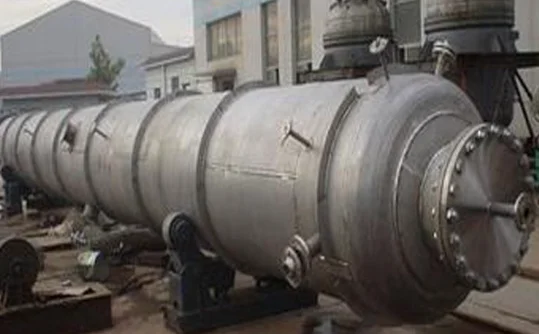
Utilizing advanced counter-current thermodynamic principles, each industrial stripping vessel is engineered to withstand severe pressures, extreme temperature ranges, and highly corrosive elements. Backed by 20 years of hands-on technical execution and essential quality benchmarks, including API, ASME, and ISO certifications, our specialized engineering team handles everything from initial process simulation to complete structural fabrication. Our structural designs guarantee up to 99% volatile organic compound (VOC) removal efficiency, stable multi-phase equilibrium, and optimized liquid-vapor distribution.
When plant efficiency and environmental compliance cannot be compromised, leading operators depend on our Italian-manufactured columns for long-term mechanical reliability and unmatched separation accuracy. To discover how our high-performance stripping internals and custom alloys can optimize your refinery or processing facility, visit our technical team at Contact Us to secure a specialized process evaluation.
Frequently Asked Questions
1. What does a stripper column do in an industrial process?
An industrial stripper column is a specialized mass-transfer pressure vessel designed to remove one or more volatile components from a liquid stream. By introducing a stripping agent—typically a gas such as steam, air, or nitrogen—the column facilitates the separation of components based on differences in relative volatility.
2. How does the counter-current flow design maximize stripping efficiency?
In a standard configuration, the liquid feed enters at the top of the column and flows downward under gravity, while the stripping gas is injected at the bottom and rises upward. This counter-current movement ensures that the leanest liquid meeting the freshest gas maintains a continuous, high concentration gradient throughout the vessel height, optimizing mass transfer.
3. Which industries rely on industrial stripping columns manufactured in Italy?
Italian-manufactured columns serve a global network of heavy industries, primarily:
- Oil & Gas: Amine regeneration, sour water stripping, and crude oil stabilization.
- Chemical & Petrochemical: Solvent recovery, monomer purification, and intermediate byproduct separation.
- Wastewater Treatment: Removal of dissolved gases, ammonia, and hazardous volatile organic compounds (VOCs). enertherm-engineering.com
4. What is the difference between a packed stripper column and a tray stripper column?
- Packed Columns: Utilize structured or random packing material (such as Raschig rings or specialized geometric grids) to provide a continuous, high surface area for liquid-gas contact. They feature low pressure drop and are highly resistant to foaming. www.sprayengineering.com
- Tray Columns: Rely on structured horizontal stages (sieve, valve, or bubble-cap trays) where liquid pools and gas bubbles through perforations. They excel in handling wide variations in flow rates and large-scale capacities. en.wikipedia.org
5. Why is Nordstone considered a top-tier stripper column manufacturer in Italy?
Nordstone blends over thirty years of overarching design expertise with a dedicated 20-year history of complex pressure vessel fabrication. Our manufacturing facility in Italy combines cutting-edge thermodynamic process simulation with rigorous mechanical execution, satisfying stringent global industrial frameworks.
6. What core design certifications does Nordstone maintain for mass-transfer columns?
Every industrial vessel we produce adheres to strict global codes. We design and manufacture columns in accordance with the ASME Section VIII Division 1 code for pressure vessels, alongside API standards for petroleum applications and comprehensive ISO quality assurance frameworks.
7. Which materials of construction (MOC) are available for corrosive environments?
To resist highly corrosive process fluids and chemical streams, we manufacture columns using a broad spectrum of metallurgy:
- Austenitic Stainless Steel (SS304, SS316, SS316L) www.expertecoindustrialsolutions.in
- Duplex and Super Duplex Stainless Steel
- Titanium and Nickel-based exotic alloys
- Carbon steel with corrosion-resistant internal cladding
8. What is the difference between a distillation column and a stripping column?
While both rely on vapor-liquid equilibrium, a distillation column typically introduces feed into the middle of the tower and uses an integrated reboiler at the base to generate vapor, separating both light and heavy components. A stripping column focuses strictly on removing light components from a liquid feed introduced at the top, using an external stripping agent with lower overall thermal energy inputs.
9. Can Nordstone build custom internal components for existing column retrofits?
Yes. Beyond manufacturing turnkey column shells, our engineering team designs and manufactures high-efficiency custom internals, including proprietary liquid distributors, packing support plates, mist eliminators, and customized tray assemblies to optimize existing plant infrastructure.
10. How do steam stripping columns perform solvent recovery?
Steam stripping introduces live steam into the base of the column to lower the partial pressure of volatile organic solvents dissolved in water. The heat from the steam vaporizes the solvents, carrying them out of the top of the column where they are condensed, phase-separated, and safely recovered.
11. What is an air stripping column and when is it used?
Air stripping columns utilize ambient air pumped into the bottom of a packed tower to strip volatile contaminants out of water. This specific type is most commonly deployed in environmental remediation projects, such as removing benzene, toluene, or chlorinated solvents from contaminated groundwater.
12. How does Nordstone prevent product leakage under high operating pressures?
Our engineering process incorporates advanced joint design, automated precision welding, and non-destructive testing (NDT) such as radiography and ultrasonic inspections. Coupled with advanced industrial gasketing, our columns maintain complete pressure boundary integrity under variable cycles.
13. What parameters are required to calculate the proper height and diameter of a column?
To precisely size a column, our team evaluates:
- The exact composition and chemical properties of the inlet feed stream.
- The target purity or percentage removal required for the outlet liquid.
- Operating pressure and temperature profiles.
- Vapor-liquid equilibrium data and fluid flow rates to prevent column flooding or weeping.
14. What are column flooding and weeping, and how does Nordstone prevent them?
- Flooding: Occurs when upward gas velocity is so high it prevents liquid from flowing down, causing liquid accumulation and process failure.
- Weeping: Occurs when gas velocity is too low, allowing liquid to leak straight through tray perforations instead of mixing.
We completely eliminate these risks by utilizing precise chemical engineering modeling software to establish safe, stable operating windows for every custom internal layout.
15. How can I initiate a technical consultation or request a manufacturing quote?
You can easily reach out to our technical engineering division through our specialized contact portal at Contact Us. Provide your process flow data, required design codes, and delivery parameters, and our Italian manufacturing engineers will develop a robust, custom-tailored process solution for your facility.