
With over 20 years of experience in the design, engineering, and manufacturing of critical process equipment, Nordstone has emerged as a premier partner for high-precision industrial systems across Europe.
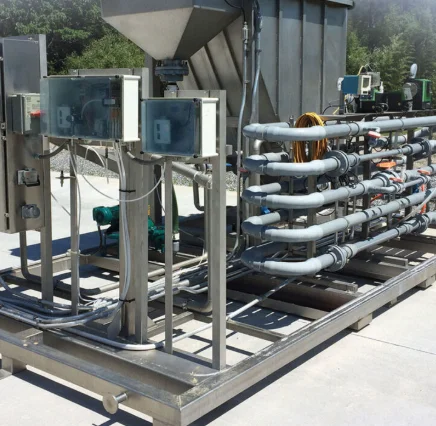
Italy’s booming chemical, pharmaceutical, and oil & gas sectors require process systems that can withstand extreme environments while ensuring absolute efficiency.
To meet these demanding continuous processing needs, Nordstone delivers custom-engineered Plug Flow Reactors (PFR) designed for unparalleled conversion rates and uniform residence times. Our state-of-the-art production processes combine Italy’s strict regulatory compliance with advanced metallurgy to build continuous tubular reactors capable of handling rapid kinetics, high temperatures, and severe corrosive media.
From fine chemical synthesis to large-scale petrochemical refinery lines, our certified industrial systems guarantee continuous, reliable throughput with zero compromise on safety.
Every industrial vessel engineered by Nordstone conforms strictly to international safety standards, including ASME Section VIII, API, and ISO certifications. By optimizing radial mixing and eliminating axial back-mixing, our Italian client network benefits from streamlined thermal control, reduced waste, and exceptionally predictable output yields. Whether your process calls for single-tube configurations, jacketed multi-tubular designs, or custom catalytic packed bed profiles, our expert engineering team delivers robust, turnkey systems from initial calculation to final deployment. Partner with a manufacturer backed by decades of proven industrial triumphs.
To discuss your specific processing parameters, design codes, or material requirements with our engineers, visit our dedicated communications portal at Contact Us to request a custom technical consultation.
Frequently Asked Questions (FAQ)
1. What is a Plug Flow Reactor (PFR) and how does it function?
A Plug Flow Reactor (PFR)—frequently referred to as a continuous tubular reactor—is a cylindrical vessel designed to process fluid or gas reactants continuously. The system operates on the “plug flow” principle: fluid flows through the tube as a series of coherent, infinitely thin “plugs.” Each plug is perfectly mixed in the radial direction (cross-section) but experiences no mixing or diffusion in the axial direction (forward or backward). As a plug moves down the length of the tube, reactants are progressively converted into products along a sharp concentration gradient.
2. What are the primary advantages of choosing a PFR over a batch reactor?
PFRs provide high volumetric efficiency, allowing for significantly greater chemical conversion per unit volume than traditional batch systems. Because they run continuously at a steady state, they provide highly consistent product quality, excellent heat transfer capability, and a small physical footprint. They eliminate the downtime associated with filling, heating, cooling, and emptying typical of batch cycles.
3. Which Italian industries benefit most from Nordstone’s Plug Flow Reactors?
Our custom PFR systems are highly sought after by Italy’s robust chemical processing, specialty pharmaceutical, petrochemical, and refining sectors. They are also widely utilized in polymer synthesis, food processing, wastewater treatment, and green energy applications where large-scale, continuous, and highly predictable throughput is essential.
4. What construction materials does Nordstone use for manufacturing PFRs in Italy?
We select premium-grade materials tailored to the specific chemical compatibility, temperature, and pressure of your process. Options include standard stainless steels (SS304, SS316, SS316L, SS904L), high-strength carbon steels (such as SA516 Gr. 60/70), and specialized corrosion-resistant alloys including Hastelloy, Monel, Inconel, and Titanium.
5. How does Nordstone manage heat transfer inside a tubular reactor?
Managing rapid, highly exothermic or endothermic reactions is critical. We engineer PFRs with advanced thermal control jackets (including full jackets, half-pipe jackets, and dimple jackets), internal or external coils, or configure the reactor as a shell-and-tube design where a heat transfer fluid circulates continuously around the reaction tubes.
6. Are Nordstone Plug Flow Reactors compliant with European and Italian safety regulations?
Yes. Our fabrication facilities adhere strictly to globally and regionally recognized design codes. We offer complete manufacturing and documentation compliant with ASME Section VIII (Div. 1 & 2), the European Pressure Equipment Directive (PED 2014/68/EU), API standards, and ISO 9001 quality management protocols.
nordstonein.com
7. What is the difference between a standard PFR and a Packed Bed Reactor (PBR)?
A standard PFR features a hollow tubular pipe handling homogeneous fluid or gas phase reactions. A Packed Bed Reactor (PBR) is a specific type of PFR where the inside of the tube is packed with solid catalyst particles. The flow profile behaves like plug flow, but the reaction occurs heterogeneously on the surface of the catalyst beds. Nordstone designs and manufactures both configurations.
8. What design parameters are required to get a custom PFR quote from Nordstone?
To accurately quote and engineer your unit, our team requires the target operating temperature and pressure ranges, chemical composition and phase of the reactants, volumetric flow rates, desired residence time, reaction kinetics (heat release details), and preferred materials of construction.
9. Can a Plug Flow Reactor handle high-viscosity fluids or polymerizations?
Yes, but they require precise engineering adjustments. While highly viscous materials or fast polymerizations can introduce a velocity profile that skews away from ideal plug flow (causing a parabolic velocity distribution), Nordstone mitigates this by integrating internal static mixers, adjusting tube diameters, or using multi-tubular layouts to maintain rapid, uniform radial distribution.
10. How does Nordstone ensure the quality and integrity of its manufactured vessels?
With over 20 years of expertise, our quality assurance program involves comprehensive testing protocols. We perform Non-Destructive Testing (NDT) including radiography, ultrasonic testing, dye penetrant testing (DPT), magnetic particle testing (MPT), alongside mandatory hydrostatic or pneumatic pressure tests to certify structural stability under extreme stresses.
11. What capacities and sizing limits do you offer for continuous reactors?
Because our systems are fully custom-engineered, we build across a wide dimensional spectrum. This ranges from compact, pilot-plant scale multi-tubular units measuring only a few centimeters in diameter up to large-scale, heavy-wall industrial installation systems spanning several meters in length and built to handle thousands of liters per hour.
12. Why is residence time distribution (RTD) so critical in a PFR?
In an ideal PFR, every single molecule spends the exact same amount of time inside the vessel (a uniform residence time). In real-world reactors, slight non-idealities occur. Nordstone uses sophisticated design modeling to ensure the RTD remains a narrow, tight pulse, preventing under-conversion or secondary over-reaction side-products from forming.
13. Can your systems handle multi-phase reactions (e.g., gas-liquid-solid)?
Absolutely. Multi-phase reactions require specialized design to ensure proper contact between the distinct phases. We configure specialized internals, specific flow orientation (up-flow or down-flow regimes), or design custom packed or fluidized bed internals to optimize mass transfer boundaries between gases, liquids, and solid catalysts.
14. What auxiliary control systems come integrated with a Nordstone PFR skid?
We provide complete, pre-assembled modular process skids. These packages can include integrated VFD-driven feed pumps, level, pressure, and temperature instrumentation, safety relief valves, rupture discs, automated flow control valves, and a fully integrated PLC/SCADA-compatible centralized control panel for seamless facility integration.
15. How can I contact Nordstone’s engineering team in Italy to kick off a project?
You can easily connect with our continuous processing experts and request a comprehensive technical analysis or structural estimate. Simply visit our digital contact channel at Contact Us and submit your processing specifications, or get in touch directly via our local sales office infrastructure.