
Nordstone is a trusted manufacturer of Plate Heat Exchangers in Italy, delivering compact, energy-efficient, and high-performance heat transfer solutions for demanding industrial applications. Backed by 20 years of engineering excellence, we design and manufacture advanced plate heat exchangers that maximize thermal efficiency while minimizing space requirements and operating costs. Our solutions are widely used across oil & gas, petrochemical, power generation, marine, food processing, pharmaceutical, HVAC, and industrial manufacturing sectors.
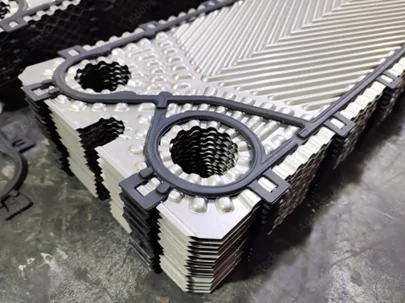
Built using premium-grade materials and precision-engineered plate technology, Nordstone plate heat exchangers provide exceptional heat transfer performance, reduced energy consumption, and reliable operation even in challenging environments.
Our hybrid heat exchanger solutions are designed to withstand high temperatures, pressure fluctuations, and corrosive process conditions while ensuring optimal thermal performance and long service life.
Every system is manufactured under strict quality standards and supported by advanced engineering capabilities, ensuring compliance with international industry requirements.
Whether clients require standard units or fully customized heat exchange systems, Nordstone delivers dependable solutions tailored to specific process needs. With a strong commitment to innovation, safety, and operational efficiency, we continue to support industries across Italy with durable and cost-effective heat transfer equipment. For customized Plate Heat Exchanger solutions and expert technical support, visit our internal page: Contact Us.
Top 15 Frequently Asked Questions (FAQs)
1. What makes Nordstone a leading plate heat exchanger manufacturer for Italian industries?
Nordstone combines 20 years experience in industrial heavy manufacturing with rigorous adherence to global standards (ASME, API, ISO). We specialize in custom-engineered, compact thermal systems that address the unique space constraints and high-efficiency requirements of modern Italian industrial plants.
2. What exactly is a hybrid plate heat exchanger?
A hybrid solution integrates the high thermal transfer efficiency of corrugated plates with the robust structural integrity and pressure resistance of a traditional shell-and-tube vessel. This design allows process plants to manage extreme pressures while keeping equipment footprints small.
3. Which industrial sectors in Italy do your thermal systems serve?
Our specialized high-performance units are engineered primarily for demanding industrial sectors, including:
- Oil & Gas: Refining, separation, and upstream processing. nordstonein.com
- Chemical & Petrochemical: Corrosive fluid processing and aggressive thermal cycles. nordstonein.com
- Defence & Maritime: Marine propulsion cooling and heavy-duty naval infrastructure.
- Power Generation: High-temperature steam condensing and heat recovery.
4. How do compact heat exchangers optimize space in process facilities?
By utilizing a dense pack of thin, corrugated plates rather than large bundles of heavy piping, our heat exchangers achieve identical or superior heat transfer coefficients in up to 70% less physical space compared to conventional shell-and-tube units.
5. Can Nordstone systems withstand high-temperature and high-pressure applications?
Yes. Unlike standard gasketed variants that have strict pressure thresholds, our welded and semi-welded hybrid configurations are engineered to operate reliably under extreme pressures (exceeding 100 bar) and temperatures ranging from –20°C to over +400°C.
6. What materials are used to prevent corrosion in aggressive environments?
To ensure long operational life in corrosive environments, we manufacture our plates and internal surfaces using premium-grade materials, including:
- Stainless Steel (SS316L, SS904L)
- Hastelloy
- Inconel
- Titanium
7. How does the corrugation pattern on the plates improve thermal efficiency?
The precise corrugation geometry induces highly turbulent fluid flow even at low velocities. This turbulence breaks down the fluid boundary layer, drastically improving the heat transfer coefficient and helping to sweep away particulate matter to minimize fouling.
8. What global and regional quality certifications do Nordstone products hold?
Our engineering designs and manufacturing workflows strictly conform to international and European frameworks, including ASME Section VIII Div. 1 & 2, API 660, ISO 9001, and PED 2014/68/EU compliance for pressure equipment within the European Union.
9. Are these units customized for specific chemical compositions?
Absolutely. Every unit is custom-tailored based on the thermodynamic properties, viscosity, density, and chemical aggressiveness of both the process and cooling fluids provided by your engineering team.
10. How does Nordstone prevent cross-contamination between fluid streams?
Through advanced automated welding procedures and meticulous non-destructive testing (NDT)—including radiography, ultrasonic, and hydrostatic pressure verification—we guarantee zero internal leakage or bypass between separate process channels.
11. What maintenance protocols are required for your hybrid exchangers?
Because our hybrid solutions promote high internal turbulence, they naturally resist fouling. For deep cleaning, units are designed with optimized back-flushing channels, CIP (Clean-in-Place) compatibility, or accessible mechanical arrangements depending on whether a fully welded or semi-welded configuration is chosen.
12. How does a close temperature approach benefit industrial operations?
Our high-efficiency plate designs allow for an exceptionally close temperature approach (often less than 1°C). This means you can recover maximum thermal energy from low-grade waste heat streams, directly reducing plant operating costs.
13. Does Nordstone offer localized engineering support within Italy?
Yes. We provide complete technical consultation, thermal calculation documentation, and installation guidelines tailored to integrate smoothly with existing Italian plant layouts and fluid utility networks.
14. What is the standard lead time for a custom-engineered unit?
Lead times vary depending on structural complexity, chosen metallurgy, and testing requirements. After reviewing your specific design parameters, our team provides an accurate engineering schedule that covers raw material sourcing, precision fabrication, and certified inspection phases.
15. How can we request a detailed technical quotation for our project?
You can submit your flow rates, operating temperatures, maximum allowable pressure drops, and fluid characteristics directly to our technical sales division through our dedicated Contact Us portal for a comprehensive thermal and mechanical calculation evaluation.