For industrial operations across Italy, maximizing thermal efficiency while maintaining strict process safety is a critical priority. As a premier global manufacturer with over 20 years of experience in designing and manufacturing certified thermal systems, Nordstone delivers high-performance Shell & Tube Heat Exchanger units tailored to the demanding conditions of southern and central European industries.
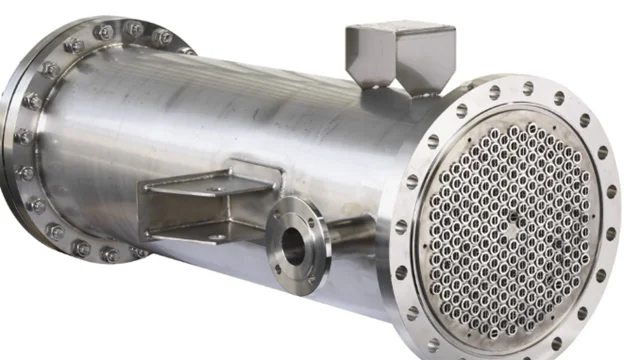
Engineered in compliance with rigorous ASME Section VIII, TEMA, and European PED (2014/68/EU) standards, our systems provide unparalleled heat transfer efficiency and mechanical reliability. Whether your plant requires a robust custom design to withstand extreme pressures, high temperatures, or highly corrosive process fluids, our state-of-the-art facilities and expert engineering teams deliver custom-built configurations—ranging from fixed tubesheets to floating heads and U-bundles. By incorporating advanced thermal modeling, premium metallurgy (including stainless steel, Duplex, and nickel alloys), and stringent quality control, Nordstone guarantees systems optimized for lower pressure drops and extended operational lifespans across Italy’s chemical processing, oil and gas refining, power generation, and heavy manufacturing sectors.
20 Years of Certified Engineering Excellence
Nordstone’s production framework integrates API, ASME, and ISO credentials, guaranteeing structural integrity and optimal thermal dynamics for critical Italian infrastructure. For customized technical inquiries or engineering consultations, connect directly with our global team through our Contact Us page.
Frequently Asked Questions (FAQ)
1. What design codes and standards do Nordstone Shell & Tube Heat Exchangers follow for the Italian market?
All units deployed in Italy strictly comply with the European Pressure Equipment Directive (PED) 2014/68/EU and carry CE marking. Mechanically and thermally, they are engineered following international standards such as ASME Section VIII (Div 1 & 2) and TEMA (Tubular Exchanger Manufacturers Association) Classes R, C, and B.
2. Which industries in Italy do you primarily serve with your thermal equipment?
Our high-pressure thermal solutions support critical applications in Italian refineries, petrochemical facilities, chemical synthesis plants, power generation stations, and offshore maritime operations. We specialize in units built for high-fouling, aggressive, or high-temperature process fluids.
3. What configurations of Shell & Tube Heat Exchangers do you manufacture?
We offer a comprehensive selection of TEMA-designated designs tailored to specific maintenance and process requirements:
- Fixed Tubesheet (TEMA L, M, N): Cost-effective, robust, ideal for minimal thermal expansion differentials.
- U-Tube BUNDLE (TEMA U): Excellent for extreme thermal shock as the bundle expands independently of the shell; easily removable for cleaning.
- Floating Head (TEMA P, S, T): Designed for high-temperature differentials where mechanical cleaning of both tube and shell interiors is required.
4. What materials are available to prevent chemical corrosion?
We select premium alloys based on your specific stream composition. Available materials include high-grade Carbon Steel (SA-516 Gr. 70), Stainless Steel (SS304L, SS316L, SS904L), Duplex and Super Duplex steels, as well as specialized corrosion-resistant alloys like Hastelloy, Monel, Inconel, and Titanium.
5. How does Nordstone optimize the thermal performance of each exchanger?
Our engineers utilize advanced software programs, such as AspenTech EDR (HTFS) and X-designer, to conduct meticulous thermal and fluid dynamics modeling. We precisely calculate fluid velocities, heat transfer coefficients, and allowable pressure drops to deliver maximum thermal efficiency with minimal surface area.
6. Do you provide localized engineering calculations and documentation for Italian authorities?
Yes. We supply comprehensive documentation packages including complete mechanical calculations (via PV Elite or COMPRESS), general arrangement (GA) drawings, welding documentation (WPS, PQR, WPQ), non-destructive examination (NDE) reports, and structural calculations adjusted for localized seismic or wind loads if required by local Italian regulations.
7. Can your manufacturing facility accommodate high-pressure and high-capacity demands?
Absolutely. Backed by 20 years of experience, our state-of-the-art facilities are equipped to handle complex, heavy-wall vessel fabrications. We regularly engineer units capable of managing design pressures exceeding 100 bar and operating temperatures ranging from cryogenic levels up to +400°C.
8. What non-destructive testing (NDT) options are conducted on the bundles and shells?
To enforce uncompromising safety, we conduct a battery of in-house quality assurance tests, including:
- Full or spot Radiography Testing (RT) and Ultrasonic Testing (UT) for pressure-retaining welds.
- Dye Penetrant Testing (DPT) and Magnetic Particle Testing (MPT).
- Hydrostatic pressure testing (typically at 1.3 to 1.5 times the design pressure) and pneumatic testing. nordstoneng.com
9. How do you prevent tube vibration and premature mechanical failure?
Every design undergoes strict flow-induced vibration analysis according to TEMA guidelines. We optimize baffle spacing, select appropriate baffle cut percentages, and implement specialized support structures (such as sealing strips or no-tubes-in-window designs) to completely eliminate acoustic or fluid-elastic vibration hazards.
10. Can you manufacture exact-fit replacement tube bundles for existing installations in Italy?
Yes. If your existing shell is structurally intact but the internal tubes have fouled or corroded, we can custom-engineer and manufacture an exact-fit replacement tube bundle based on your original manufacturer drawings or on-site dimensions, minimizing plant downtime.
11. What is the typical lead time for delivering a custom heat exchanger to Italy?
Lead times vary depending on size, material availability (especially specialty alloys), and engineering complexity. Standard units typically ship within 12 to 16 weeks, while highly complex, large-scale, or exotic alloy systems may require longer. Precise project schedules are always provided during the quoting phase.
12. How are the internal surfaces polished or treated for chemical applications?
Depending on client specifications, we offer various surface finishes. These range from industrial passivation and acid pickling to premium sandblasting, specialized protective epoxy/phenolic coatings, or high-purity electropolishing for sensitive chemical or pharmaceutical streams.
13. What details are needed to receive a formal thermal design proposal?
To provide an optimized thermal and mechanical quote, please prepare the following parameters:
- Fluid Media: Composition of both shell-side and tube-side fluids.
- Flow Rates: Mass or volumetric flow rates for both streams.
- Temperatures: Inlet and desired outlet temperatures.
- Operating Pressures: Maximum operating pressures and allowable pressure drops.
- Material Preferences: Specific metallurgy constraints or known corrosion challenges.
14. How does Nordstone manage logistics and delivery to industrial sites across Italy?
We maintain a highly coordinated global logistics network. All equipment is securely packed, skidded, and sea- or land-freighted directly to your industrial site or port in Italy, complete with all customs clearances, transit insurance, and structural export tie-downs handled by our teams.
15. Where should we submit our technical specifications and request for quotation (RFQ)?
You can initiate a formal engineering review by sharing your project specifications, datasheet inputs, or mechanical drawings with our technical sales division through our secure contact portal online at Contact Us. An expert thermal engineer will connect with you to review your parameters.