As an established pioneer in heavy industrial fabrication, Nordstone stands at the forefront of premier blast furnace gas (bfg) valves – dust catcher & gas cleaning valves manufacturers in italy, delivering highly engineered flow control and isolation solutions for primary emissions handling and energy recovery networks.
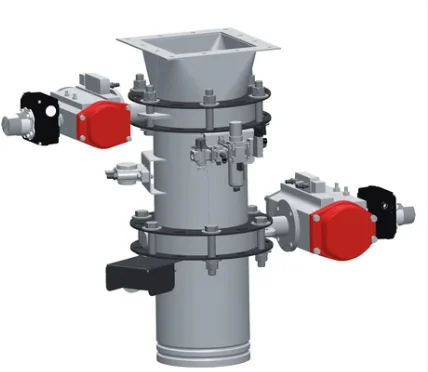
Engineered to withstand the severely abrasive, volatile, and high-dust environments of crude gas cleaning systems, our heavy-duty valve configurations guarantee continuous operational reliability behind the furnace throat.
Drawing on over 20 years of expert engineering experience, our team specializes in the detailed mechanical design and precise manufacturing of critical dust catcher and gas cleaning infrastructure—including heavy dust discharge valves, equalizer valves, raw gas butterfly control blocks, and emergency isolation goggle systems optimized to maintain absolute tight shut-off under severe particulate loads.
Our state-of-the-art manufacturing facility combines advanced automated welding overlays with premium certified metallurgy to construct durable valve bodies, discs, and seats that eliminate thermal fatigue and completely resist the severe erosion caused by high-velocity blast furnace dust. Every specialized gas cleaning valve package is engineered with hard-faced sealing faces, custom-positioned internal flushing nozzles, and heavy-duty hydraulic or electric actuation configurations designed for flawless, spark-free plant integration.
By maintaining uncompromising compliance with critical international and European engineering benchmarks—including API 6D, ASME Section VIII, EN 12516, CE marking, and the European Pressure Equipment Directive (PED 2014/68/EU)—Nordstone guarantees unmatched structural longevity, operational safety, and maximum blast furnace uptime for Italy’s heavy metallurgical and environmental infrastructure.
To collaborate with our senior flow control engineering team on your custom dust catcher or wet/dry gas cleaning parameters, please visit our contact page.
Technical FAQ (Top 15)
Q1: What specific function do dust catcher and gas cleaning valves serve in a BFG network?
These valves manage the transition of raw, uncooled blast furnace gas from the furnace top into primary cleaning systems. Dust catcher valves handle the isolation and evacuation of highly abrasive, heavy dry dust particles separated by gravity, while gas cleaning valves regulate gas flow, equalization, and isolation across down-stream electrostatic precipitators or wet venturi scrubbers.
Q2: Which industrial certification codes govern your BFG gas cleaning valves in Italy?
All Nordstone BFG cleaning valves are built to rigid global safety mandates. For projects in Italy and across Europe, our equipment carries the CE marking in strict compliance with the Pressure Equipment Directive (PED 2014/68/EU) and European standard EN 12516 (Valves – Shell design strength), alongside technical alignments with ASME Section VIII and API 6D structural rules.
Q3: How does Nordstone prevent severe erosion on valve seats from high-velocity blast furnace dust?
Erosion control is a primary engineering objective. We protect all exposed valve internal seats and discs by applying thick, automated weld overlays of premium hard-facing materials, such as Stellite, tungsten carbide, or chromium carbide claddings, which dramatically increase structural resistance against continuous particulate blasting.
Q4: Why is a goggle valve critical for the gas cleaning plant maintenance loop?
Because BFG contains lethal concentrations of carbon monoxide (CO) and is highly explosive, standard butterfly or gate valves do not provide the safety margin required for downstream human entry. A heavy-duty goggle valve provides an absolute, visible mechanical blanking plate that guarantees 100% gas-tight isolation, ensuring zero bypass leakage into the maintenance zone.
Q5: What type of actuation options are provided for dust catcher discharge valves?
We supply fully integrated automation packages engineered to handle high breakout torques. This includes heavy-duty hydraulic power units (HPUs) with proportional cylinders for smooth mechanical positioning, as well as robust electric actuators (such as Auma or Rotork) equipped with dust-proof, heavy-ratio gearboxes.
Q6: Are your gas cleaning system valves certified for explosive ATEX locations?
Absolutely. Since crude and semi-cleaned BFG forms highly explosive mixtures when combined with ambient air, all integrated electrical components—including position indicators, limit switches, solenoids, and field junction boxes—are fully ATEX-certified for Zone 1 and Zone 2 hazardous areas.
Q7: What metallurgy is utilized for the primary valve shells and internal discs?
We construct our primary valve bodies from high-tensile, heat-resistant carbon or boiler steels (such as P355NH or 16Mo3) designed to withstand elevated blast furnace top temperatures. For internal components directly exposed to wet, acidic gas condensate, we utilize premium 316L stainless steel or Duplex alloys to completely prevent localized pitting and stress corrosion cracking.
Q8: How does a BFG equalizer valve manage pressure balancing during stove changes?
Equalizer valves handle the critical task of balancing gas pressure between the blast furnace gas main and auxiliary equipment before primary isolation valves open or close. This eliminates severe pneumatic shocks, balances differential pressures across large-diameter discs, prevents mechanical seat dragging, and lowers the torque required for primary actuation.
Q9: Can your BFG dust valves handle wet sludge from venturi scrubbers?
Yes. For wet gas cleaning plants utilizing venturi scrubbers or water wash towers, we design specialized sludge discharge valves featuring optimized internal flow geometries, corrosion-resistant linings, and self-cleaning seat scrapers that prevent thick, wet metallurgical cakes from jamming the valve stroke.
Q10: What non-destructive testing (NDT) protocols are implemented during fabrication?
In strict compliance with our ISO 9001 quality infrastructure, all structural and pressure-containing welds undergo exhaustive NDT tracking. This includes 100% Radiographic Testing (RT) on primary seams, Ultrasonic Testing (UT), and Magnetic Particle Testing (MT). Every valve assembly also undergoes witnessed pneumatic seat-leakage and hydrostatic shell validation tests.
Q11: How do your valve control electronics interface with a steel mill’s master SCADA platform?
Our automated valve modules feature smart field enclosures built around open-architecture PLCs (typically Siemens S7-1500 or Rockwell Automation platforms). We configure the communication layers to support native industrial protocols like Modbus TCP, Profinet, or Profibus DP, providing real-time telemetry regarding exact valve position, hydraulic pressure parameters, and safety interlock tracking.
Q12: Do you offer Factory Acceptance Testing (FAT) at your facility in Italy?
Yes. Every dust catcher and gas cleaning valve configuration undergoes rigid Factory Acceptance Testing prior to shipment. Your engineering representatives or designated third-party inspection bodies are given full access to witness dimensional verification, electrical loop checks, automated sequence timing, and zero-leakage sealing verification.
Q13: Which third-party inspection bodies do you regularly collaborate with in Italy?
We regularly coordinate our material traceability logs, welding procedure qualifications (WPQR), and final safety certifications with leading notified bodies active in the European heavy industrial sector, including RINA, Bureau Veritas, and TÜV.
Q14: What baseline technical parameters does your team require to draft a precise engineering proposal?
To compile an accurate technical proposal, please supply the nominal pipe diameter (DN), design and operating gas pressures, maximum gas temperature, dust concentration levels (g/Nm3), chemical composition of the gas (including moisture content), preferred actuation type, and dimensional footprint constraints.
Q15: How can a procurement manager or metallurgical project engineer initiate a valve project with Nordstone?
You can securely upload your technical specifications, piping layout coordinates, or equipment data sheets through our secure corporate interface. To arrange an initial technical consultation with our senior flow control and gas treatment engineers, please connect with us directly via our contact page.