As a premier choice among photochemical & electrochemical reactors manufacturers in Italy, Nordstone combines 20 years of engineering expertise with advanced technical innovation to design and fabricate high-performance industrial vessels.
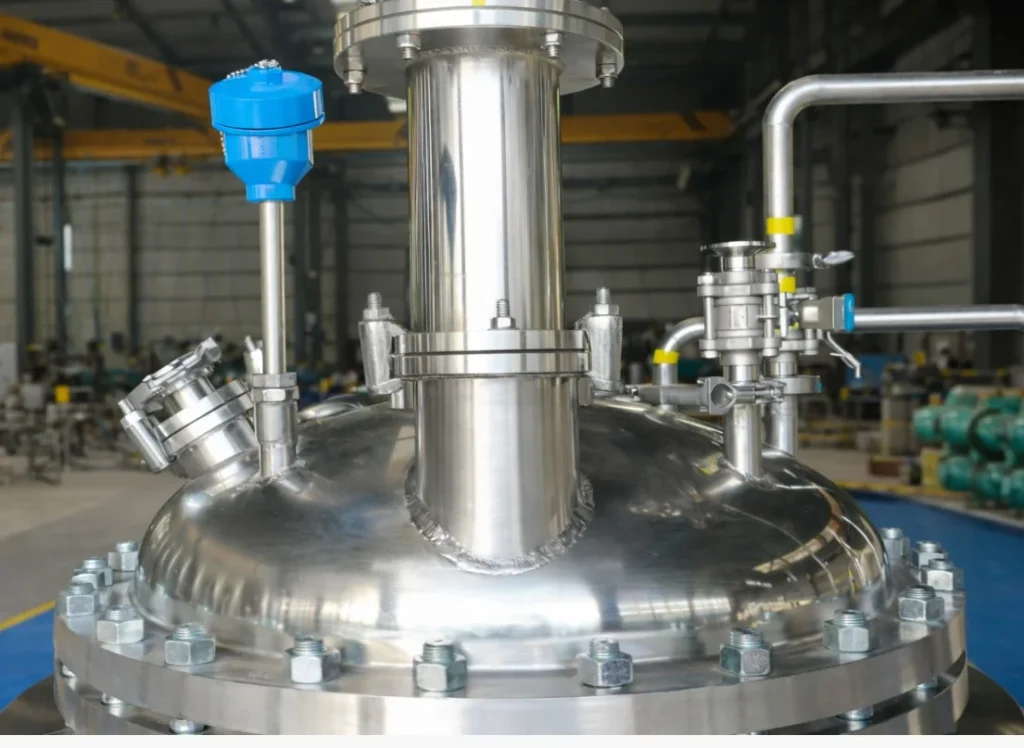
Our state-of-the-art manufacturing facility engineers bespoke custom solutions capable of withstanding extreme pressures, severe temperatures, and highly corrosive chemical environments.
Catering to critical applications across Italy’s chemical processing, pharmaceutical, and green energy sectors, we build highly specialized reactors equipped with precise optical pathways for photon transmission and specialized electrode geometries for efficient mass transfer.
Every customized system we manufacture adheres strictly to international codes, backed by our comprehensive API, ASME, and ISO certifications. By integrating specialized metallurgy, such as Hastelloy, Titanium, and premium stainless steel grades, we guarantee unmatched process safety and reliability. Partner with Nordstone to elevate your industrial processing efficiency with chemical reactors that set benchmarks for reliability, mechanical endurance, and compliance.
For custom design specifications or to speak with our engineering team regarding your project requirements, visit our Contact Us page today.
Frequently Asked Questions (FAQ)
1. What makes Nordstone a leading choice among photochemical & electrochemical reactors manufacturers in Italy?
Nordstone stands out due to our 20 years of industrial manufacturing experience, state-of-the-art facility, and a dedicated team of expert engineers. We custom-engineer vessels compliant with strict ASME, API, and ISO standards, ensuring our reactors withstand the extreme pressures and corrosive environments common in Italy’s advanced chemical and pharmaceutical sectors.
2. What types of industrial applications use your photochemical reactors?
Our photochemical reactors are widely utilized in pharmaceutical synthesis, water treatment purification, hazardous pollutant degradation, and specialized polymer production. They are engineered to maximize photon efficiency and ensure uniform light distribution throughout the reaction mixture.
3. How does Nordstone optimize mass transfer in its electrochemical reactors?
We optimize mass transfer by custom-designing internal electrode spacing, flow dynamics, and fluid agitation pathways. Using advanced fluid simulations, our engineering team ensures uniform current density distribution across the electrodes, preventing hot spots and maximizing chemical yield.
4. Can Nordstone manufacture reactors using exotic, corrosion-resistant alloys?
Yes. To handle highly corrosive reaction environments, we specialize in fabricating vessels from premium materials. These include Stainless Steel (SS316L, SS904L), Hastelloy, Monel, Inconel, and Titanium, as well as specialized internal linings.
5. Are your reactors certified for use in European and Italian industrial plants?
Absolutely. All our industrial pressure vessels and chemical reactors comply with international codes such as ASME Section VIII (Div. 1 & Div. 2) and can be fully certified under Europe’s Pressure Equipment Directive (PED 2014/68/EU), ensuring complete compliance with Italian safety regulations.
6. What temperature and pressure ranges can your custom reactors handle?
Our custom-engineered process reactors are designed to operate under severe conditions, ranging from full vacuum up to high pressures exceeding 100 bar, and handling operating temperatures from –20°C up to +400°C depending on the specific application requirements.
7. How do you integrate light sources into your photochemical reactors safely?
We incorporate highly durable optical glass ports (such as high-purity quartz or sapphire) and specialized internal immersion wells. This ensures optimal light transmission from UV or LED sources while maintaining a reliable, high-pressure seal that guarantees zero process leakage.
8. Does Nordstone offer custom scale-up services for pilot plants to commercial production?
Yes. Our expert engineering team assists clients from the early design phase up to turnkey industrial scale-up, ensuring that fluid dynamics, heat transfer parameters, and reaction kinetics scale seamlessly from small pilot units to massive industrial vessel installations.
9. What quality control testing procedures do your vessels undergo?
Every vessel undergoes a zero-defect quality control process. This includes non-destructive testing (NDT) such as radiography, ultrasonic testing, dye penetrant inspection, magnetic particle testing, and rigorous hydrostatic or pneumatic pressure testing prior to shipment.
10. Can your electrochemical reactors be integrated into continuous flow automated systems?
Yes, our reactors are fully compatible with automated industrial setups. We can design and deliver them as skid-mounted modular units complete with localized instrumentation, sensors, and PLC/SCADA-compatible control panels for automated processing.
11. What heating and cooling options are available for your chemical reactors?
We offer comprehensive thermal management systems, including conventional outer jackets (Full, Half-Pipe, or Dimple jackets), internal cooling coils, and limpet coils, ensuring precise temperature regulation for highly exothermic or endothermic reactions.
12. How does Nordstone handle shipping and regulatory documentation for Italy?
We provide complete export-ready packaging, streamlined logistics, and comprehensive documentation packages. This includes Material Test Certificates (MTCs), Welding Procedure Specifications (WPS), Factory Acceptance Testing (FAT) reports, and structural calculations.
13. What agitation systems are available for your stirred tank reactors?
We offer a wide variety of agitation systems tailored to fluid viscosity, including Anchor, Turbine, Helical, Propeller, and Pitched Blade impellers. For critical or toxic chemical processes, we provide high-safety magnetic drives to eliminate risk of shaft-seal leaks.
14. How long is the typical manufacturing lead time for a custom-built reactor?
Lead times vary depending on the mechanical complexity, vessel capacity, and material availability (such as exotic alloys). Once the design, engineering calculations, and General Arrangement (GA) drawings are approved, we establish a fixed manufacturing schedule to ensure on-time delivery.
15. How can I request a technical consultation or a quote for a project in Italy?
You can contact our technical sales and engineering departments directly by visiting our dedicated contact page at Contact Us. Share your specific process parameters, and our team will provide a comprehensive technical proposal and quotation.