As leading bladder and diaphragm tank manufacturers in Italy, Nordstone delivers heavy-duty, certified surge protection and expansion solutions engineered for critical industrial systems. With 20 years of experience, we specialize in fabricating custom pressure vessels designed to absorb hydraulic shock, manage thermal expansion, and maintain stable pressure control in extreme environments.
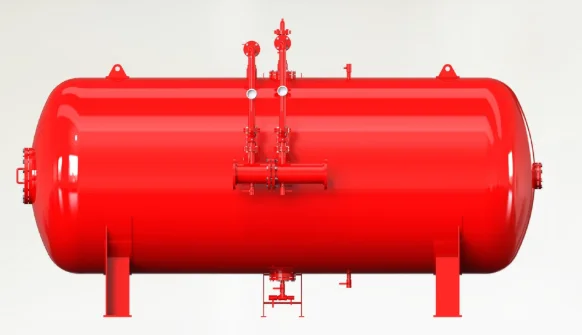
Our premium industrial tanks utilize an internal elastomeric membrane or physical diaphragm barrier to isolate compressed gas from the process fluid. This advanced design completely eliminates gas absorption, prevents internal pipeline corrosion, and minimizes system maintenance.
Built to withstand volatile pressures and corrosive fluids, our vessels are fully compliant with API, ASME Section VIII, and ISO frameworks. Whether your operations require standard vertical expansion units or complex, large-scale shock attenuators, Nordstone delivers unmatched precision-engineered performance. Protect your infrastructure from dangerous water hammer occurrences and pressure spikes—reach out to our engineering team today for a customized technical consultation.
Frequently Asked Questions (FAQ)
1. What makes Nordstone a reliable choice among bladder and diaphragm tank manufacturers in Italy?
Nordstone brings 20 years of experience in heavy-duty pressure vessel fabrication. Our manufacturing facilities utilize advanced automated welding and rigorous non-destructive testing (NDT) to ensure absolute structural integrity. We specialize in custom-tailored industrial solutions designed to meet the strict regulatory codes of the Italian and broader European markets, including full ASME and PED compliance.
2. What is the fundamental difference between a bladder tank and a diaphragm tank?
- Bladder Tanks: Contain a completely replaceable, balloon-like elastomeric bladder inside the steel shell that holds the process fluid, ensuring the fluid never touches the metal walls.
- Diaphragm Tanks: Utilize a fixed, flat, or contoured membrane securely clamped across the middle of the vessel, dividing the interior into separate air and liquid chambers.
3. Which international engineering certifications do Nordstone vessels carry?
Our industrial vessels are designed and certified under the world’s most trusted manufacturing frameworks:
- ASME Section VIII Div. 1 & 2 (American Society of Mechanical Engineers)
- CE / PED (European Pressure Equipment Directive)
- API Standards (American Petroleum Institute for oil and gas installations) nordstonein.com
- ISO 9001:2015 (Quality Management Systems) nordstonein.com
4. How do these tanks protect infrastructure against hydraulic water hammer?
When a valve closes abruptly or a pump trips, a high-velocity pressure wave travels through the piping. Our bladder and diaphragm tanks act as shock absorbers; the fluid forces its way against the flexible internal membrane, compressing the pre-charged nitrogen or air zone. This instantly dampens the kinetic energy and keeps pipeline pressure within safe limits.
5. What materials does Nordstone use to manufacture the external shells?
Depending on your operational environment and fluid characteristics, we fabricate external pressure hulls using premium-grade materials:
- High-tensile carbon steels (such as SA516 Gr. 70) nordstonein.com
- Austenitic stainless steels (SS304, SS316, and low-carbon SS316L) nordstonein.com
- Duplex and Super Duplex stainless steels for high-salinity or severe chemical environments nordstonein.com
6. What types of internal membrane compounds are available for specific applications?
We match the internal elastomer directly to your fluid chemistry and temperature specs. Options include:
- Butyl / EPDM: Ideal for standard water, HVAC, and thermal expansion systems.
- Nitrile (NBR): Highly resistant to hydrocarbons, oils, and industrial fuels.
- Viton (FKM): Designed for extreme thermal ranges and highly aggressive chemical media. nordstonein.com
7. Can Nordstone tanks be deployed in high-pressure oil and gas applications?
Yes. Our specialized engineering track record spans critical heavy industries, including offshore and onshore Oil & Gas, chemical processing plants, and Defence installations. We build custom accumulator vessels that reliably operate under extreme high-pressure conditions and severe cyclic stresses.
8. What custom engineering options does Nordstone offer?
Every project is unique. We provide extensive customizations including vertical or horizontal configurations, specialized external multi-coat epoxy systems for coastal environments, anti-corrosive interior linings, automated pressure monitoring ports, individual safety relief valve integrations, and pre-assembled, modular skid packaging.
9. Why is a nitrogen pre-charge preferred over standard compressed air?
Nitrogen is an inert gas, meaning it lacks oxygen and moisture. Using dry nitrogen to pre-charge the gas side of the bladder significantly reduces internal oxidative corrosion, maintains a more stable pressure across varying temperatures, and extends the overall operational lifespan of the elastomeric membrane.
10. What routine maintenance is required for industrial diaphragm and bladder tanks?
Unlike traditional plain steel accumulator vessels that require frequent venting due to air dissolving into the water, membrane-isolated tanks are exceptionally low maintenance. The primary requirement is a periodic, biannual check of the gas pre-charge pressure when the system is isolated and depressurized.
11. Can the bladder be replaced onsite if it wears out?
Yes. Our top-aperture, flange-mounted bladder tanks are explicitly engineered for simple, non-destructive onsite servicing. If a bladder exhibits wear after years of heavy cycling, the top flange can be unbolted, the old bladder extracted, and a genuine replacement insert installed without removing the entire steel vessel from the pipeline layout.
12. How does Nordstone ensure the structural safety of its vessels?
Quality control is embedded into every stage of manufacturing. We subject our tanks to exhaustive non-destructive testing protocols, including:
- Radiographic testing (X-ray) on primary welded seams
- Ultrasonic testing
- Magnetic particle inspection
- Hydrostatic pressure testing at 1.3 to 1.5 times the maximum allowable working pressure (MAWP)
13. What pressure ratings and capacities can Nordstone handle?
Our advanced production facility handles diverse volume requirements from compact 100-liter shock accumulators up to large-scale industrial surge tanks holding tens of thousands of liters. Pressure configurations are entirely customizable, regularly satisfying requirements from standard 10-bar systems to ultra-high-pressure installations exceeding 100 bar.
14. Are Nordstone bladder tanks suitable for safe drinking water installations?
Absolutely. For municipal water distribution networks and desalination facilities, we utilize specialized, food-grade, FDA-approved and NSF-certified EPDM or butyl bladders. This guarantees that the stored potable water remains uncontaminated, entirely hygienic, and perfectly free from odor or chemical leaching.
15. How can I request a technical quote or engineering review from Nordstone?
Our engineering department is ready to assist with sizing calculations, material selection data, and custom drafting specs. Please navigate to our official channels and submit your system design parameters through our direct portal here: Contact Us.