For over 20 years, Nordstone has been an industry-leading partner in processing innovation, standing out among elite stirred tank reactors (STR / CSTR series) precision-engineered solutions manufacturers in Italy.
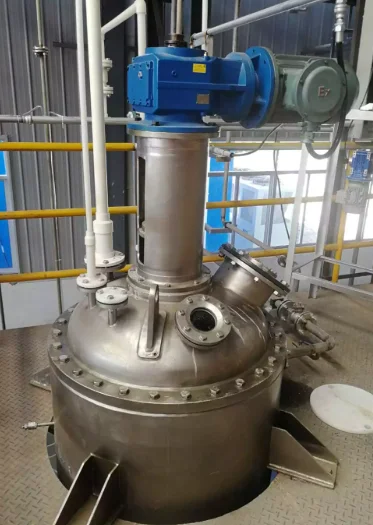
Catering to high-stakes industrial clusters across Europe, we design and manufacture high-performance Continuous Stirred Tank Reactors (CSTR) and batch Stirred Tank Reactors (STR) engineered specifically for volatile chemical processes, complex polymerizations, and strict sanitary pharmaceutical applications.
Our systems are custom-built to withstand extreme thermodynamic environments, operating seamlessly under intense structural pressures and highly corrosive conditions. By integrating cutting-edge fluid dynamics, specialized impellers, and premium metallurgy, Nordstone guarantees optimal mass transfer and uniform thermal distribution.
Backed by standard compliance certifications including ASME Section VIII, API, and PED (Pressure Equipment Directive), our Italian and international clients receive reliable, custom-engineered process vessels that optimize production yields while maintaining uncompromised operational safety.
Frequently Asked Questions (FAQ)
1. What core industrial configurations does Nordstone offer within its STR and CSTR series?
Nordstone manufactures customized batch Stirred Tank Reactors (STR) and Continuous Stirred Tank Reactors (CSTR). These configurations include jacketed or limpet-coiled options for high-efficiency heat exchange, multi-stage or variable-speed agitations, and specialized configurations for high-pressure, high-temperature, or ultra-pure applications.
2. Can Nordstone build reactors in compliance with specific Italian and European regulatory frameworks?
Yes. As standard policy for our European installations, our chemical process vessels are fully certified under the PED (Pressure Equipment Directive) 2014/68/EU and carry the CE mark. We regularly design to ASME Section VIII (Div 1 & Div 2) and EN 13445 design codes depending on project engineering specifications.
3. What types of specialized materials do you use for highly corrosive applications?
Beyond standard 304L and 316L Stainless Steels, we specialize in advanced metallurgy to survive demanding chemical profiles. Our fabrication capabilities include:
- Duplex and Super Duplex Stainless Steel
- Nickel Alloys (Inconel™, Monel™, Hastelloy™ C276/C22)
- Titanium
- High-performance internal corrosion-resistant claddings or protective glass-flake linings
4. How does Nordstone ensure efficient mixing and heat transfer in large-scale STR systems?
Every vessel profile undergoes thorough geometric scaling. We pair our mechanical designs with customized impeller types (such as anchor, turbine, helical ribbon, or hydrofoil impellers) matching your specific fluid viscosity. This is coupled with optimized thermal jackets or internal cooling coils to guarantee uniform mass transfer and eliminate unsafe thermal gradients.
5. What are the key differences between your STR and CSTR series implementations?
The batch STR series is designed for flexible, multi-product manufacturing routines where precise residence time control and variable processing steps are needed. The CSTR series is designed for continuous, steady-state production lines where raw reactants flow in and products are extracted simultaneously, minimizing downtime and maximizing throughput for dedicated chemical lines.
6. Are Nordstone stirred tank reactors suitable for ATEX-regulated hazard zones?
Yes. For chemical, oil, and gas plants tracking explosive atmospheres, we outfit our mixing assemblies with ATEX-certified explosion-proof electric motors, anti-static belts, mechanical seals, and intrinsic instrumentation suitable for Zone 1 and Zone 2 installations.
7. What sealing technologies do you use to prevent leakage under extreme pressures?
To safeguard hazardous reactions, we deploy advanced mechanical seal systems. Depending on the toxicity and pressure dynamics of your process, we offer single mechanical seals, dry-running gas-lubricated seals, or balanced double/triple mechanical seals featuring integrated barrier fluid thermosiphon systems.
8. Does Nordstone cater to the sanitary and sterile requirements of the pharmaceutical industry in Italy?
Yes. We deliver high-purity STR units designed to meet strict sanitary standards. These systems feature internal finishes ultra-polished down to Ra<0.4 μm, electro-polishing options, completely drainable bottom valves, and zero-dead-leg designs to facilitate automated Clean-in-Place (CIP) and Steam-in-Place (SIP) protocols.
9. What maximum pressure and temperature thresholds can your industrial reactors handle?
With our two decades of heavy-fabrication experience, Nordstone designs process units capable of running from full vacuum conditions up to high-pressure thresholds exceeding 200 bar, safely accommodating operating process temperatures ranging from cryogenic levels up to +400∘C.
10. Do you provide validation, testing, and quality documentation for the equipment?
Quality control is embedded throughout our production workflow. Every reactor is accompanied by a Quality Traceability Book containing:
- Material Test Certificates (MTCs via EN 10204 3.1)
- Non-Destructive Testing (NDT) reports including Radiography (RT), Ultrasonic (UT), and Dye Penetrant (DPT) testing
- Hydrostatic and pneumatic pressure test records nordstoneng.com
- Weld procedures (WPS/PQR) and welder qualifications (WPQ)
11. Can these stirred tank reactors handle high-viscosity fluids or non-Newtonian mixtures?
Yes. By designing custom heavy-duty drive heads and high-torque gearboxes, we configure reactors that successfully process heavy polymers, resins, and non-Newtonian slurry mixtures without stalling or compromising shear-rate dynamics.
12. Does Nordstone engineer skid-mounted reactor packages?
Yes, we engineer and build fully integrated, turnkey process skids. These packages arrive pre-piped, wired, and structurally framed, complete with your CSTR/STR units, heat exchangers, feed pumps, bypass valves, and localized instrumentation to drastically reduce your on-site integration timelines.
13. How does Nordstone assist with automation and process monitoring?
We configure our equipment to easily bridge with modern distributed control networks. Our systems can be integrated with analytical instruments like RTD temperature sensors, pressure transmitters, load cells for weight tracking, pH monitors, and variable frequency drives (VFDs) for dynamic speed control.
14. What is the typical lead time for a custom-built Italian-market STR or CSTR system?
Lead times vary depending on the volumetric capacity, material choice (standard vs. exotic alloys), and engineering complexity. Typically, custom process systems range from 16 to 26 weeks from approved final fabrication drawings.
15. How can we initiate a technical consultation or request a custom engineering quotation?
You can easily coordinate directly with our process engineering division. Please share your required flow rates, heat transfer requirements, design pressures, and chemical safety data sheets by submitting an inquiry through our dedicated service portal at Contact Us.