
As a premier name in critical process engineering, Nordstone leverages over 20 years of experience to deliver high-performance industrial vessels tailored for the strict demands of European bioprocessing.
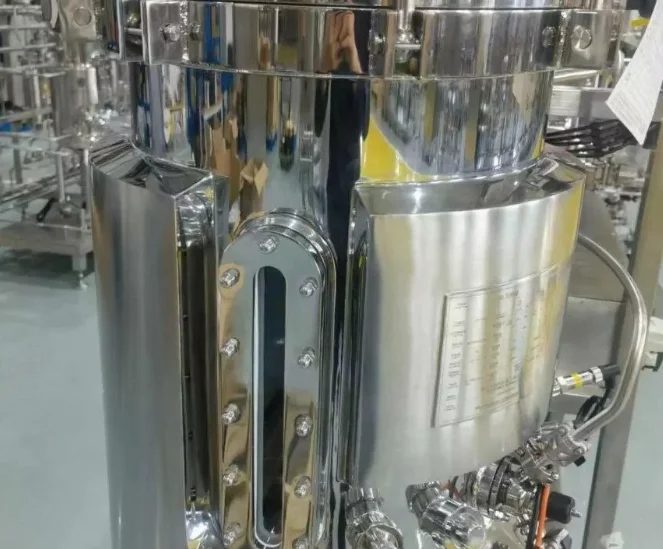
As leading bioreactors manufacturers in Italy, we specialize in designing and engineering custom fermentation vessels that bridge the gap between heavy industrial resilience and ultra-sterile operational safety. Our state-of-the-art manufacturing facility constructs robust stainless steel bioreactors capable of withstanding severe thermal cycling, corrosive biochemical media, and extreme pressure ranges.
From pharmaceutical-grade scaling to advanced industrial biotechnology, our specialized team of engineers integrates high-precision thermal jackets, automated agitation mechanisms, and elite clean-in-place (CIP) systems into every design.
Backed by our rigorous adherence to international standards—including ASME Section VIII, API, and ISO certifications—Nordstone guarantees full mechanical reliability and complete product sterility compliance for Italy’s rapidly growing biochemistry and biomanufacturing sectors. Ready to scale your custom upstream or downstream bioprocess pipeline with unrivaled structural integrity?
To discuss your project specifics, spatial requirements, or custom component integrations directly with our expert engineering team, please visit our Contact Us page.
Frequently Asked Questions (FAQ)
1. What types of bioreactors and fermentation vessels does Nordstone manufacture in Italy?
We specialize in custom, industrial-scale stainless steel bioreactors and microbial fermentation vessels. Our design portfolio ranges from seed fermenters to massive commercial production vessels used in the pharmaceutical, chemical, and food processing industries. Each system is engineered to handle custom agitation, aeration, and precise temperature-control parameters.
2. Can Nordstone’s bioreactors handle both microbial fermentation and mammalian cell cultures?
Yes. Our vessels are custom-engineered based on your specific biological processes. For microbial fermentation, we optimize the design for high oxygen transfer rates (OTR) and vigorous heat dissipation. For fragile mammalian cell cultures, we modify the vessel internal geometries, utilizing low-shear impellers (such as marine impellers) to prevent cellular damage.
3. How does Nordstone ensure compliance with European and Italian pressure vessel regulations?
All industrial vessels built for the Italian and European markets strictly comply with the Pressure Equipment Directive (PED) 2014/68/EU. Additionally, our facility is certified to manufacture vessels in accordance with ASME Section VIII (Div 1 & 2) and ISO standards, ensuring your equipment passes all local INAIL (Istituto Nazionale per l’Assicurazione contro gli Infortuni sul Lavoro) safety inspections smoothly.
4. What grades of materials do you use for high-performance bioreactor manufacturing?
We use premium-grade, fully traceable austenitic stainless steels, primarily 316L Stainless Steel for all product-contact surfaces due to its superior resistance to pitting and organic acid corrosion. For highly corrosive chemical or marine-related bioprocesses, we can fabricate vessels using Duplex, Super Duplex, or specialized nickel alloys.
5. What surface finishes do you provide to guarantee sterility and prevent contamination?
Sterility is non-negotiable in bioprocessing. We offer high-grade mechanical polishing up to a mirror finish, supplemented by electropolishing to achieve surface roughness values of Ra < 0.4 µm or better. This ultra-smooth finish eliminates microscopic crevices, preventing biofilm formation and ensuring optimal cleanability.
6. Do your vessels support automated Clean-in-Place (CIP) and Steam-in-Place (SIP) cycles?
Absolutely. Every bioreactor is designed with dedicated, strategically positioned spray balls and sanitary ports to allow complete 360-degree coverage during automated CIP and SIP routines. The vessels and their gaskets are structurally engineered to endure repeated, high-temperature steam sterilization cycles up to 134°C without compromising integrity.
7. What temperature control mechanisms are integrated into Nordstone bioreactors?
We incorporate high-efficiency dimple jackets, half-pipe coil jackets, or conventional full jackets onto the outer vessel wall. These configurations enable precise thermal regulation, allowing rapid heating for sterilization or robust cooling to counteract the exothermic heat generated during active biological fermentation phases.
8. Can you customize the nozzle configurations and port allocations on the vessel head?
Yes, full customization is a core part of our 20-year engineering heritage. We configure the vessel head and shell ports to fit your existing infrastructure perfectly, accommodating standard Ingold ports, sanitary Tri-Clamp connections, sight glasses, exhaust gas condensers, and automated sensor lines (pH, DO, temperature, foam level).
9. How do you seal the rotating agitator shaft to maintain a sterile barrier?
To prevent any cross-contamination between the process fluid and the outside environment, we utilize high-performance, sterile double mechanical seals or advanced magnetic drive (mag-drive) couplings. Mag-drive systems offer an entirely packless, hermetically sealed design, which completely eliminates the risk of seal leaks during long-duration runs.
10. Does Nordstone provide full material traceability for validation purposes?
Yes. We supply comprehensive documentation packages vital for regulatory approvals (such as EMA or FDA compliance). This includes formal material test reports (MTRs), mill certificates verifying heat numbers, welding logs (WPS/PQR), and surface roughness certifications to ensure seamless validation processing.
11. What is the typical scale or volume capacity of Nordstone industrial bioreactors?
While we evaluate minor pilot scales, our production focus is on high-performance industrial scaling. Our manufacturing capacities stretch from 500 liters up to 50,000+ liters for customized processing plants. We tailor the aspect ratios (height-to-diameter) to fit the specific mass transfer and mixing dynamics of your target process.
12. How does Nordstone manage quality control during the manufacturing phase?
We enforce rigorous quality gates at every single production step. Our testing protocols include non-destructive testing (NDT) such as radiography, ultrasonic testing, dye penetrant inspections, helium leak testing, and formal hydrostatic pressure tests to verify structural safety well beyond maximum operating pressures.
13. Can your bioreactors withstand extreme internal operating pressures and vacuums?
Yes. Our vessels are engineered to comfortably withstand positive operating pressures required for head-space control or pneumatic transfers, as well as full vacuum conditions. Full vacuum ratings prevent vessel implosion during rapid cooling cycles immediately following hot SIP sterilization runs.
14. What are the typical lead times for a custom bioreactor intended for an Italian facility?
Lead times vary depending on the volumetric scale, design complexity, and specific material availability. Generally, custom-engineered, fully certified industrial bioreactors take between 16 to 24 weeks from final engineering blueprint approval to factory delivery.
15. How do we initiate a technical consultation or request a formal quote?
You can initiate a project review by navigating directly to our Contact Us page. Provide our engineering squad with your key operational parameters—such as volume capacity, temperature ranges, pressure constraints, and required certifications—and we will formulate a detailed mechanical proposal tailored to your facility.