
For over 20 years, Nordstone has established itself as an authoritative European leader in designing and manufacturing high-performance process equipment and premium industrial vessels.
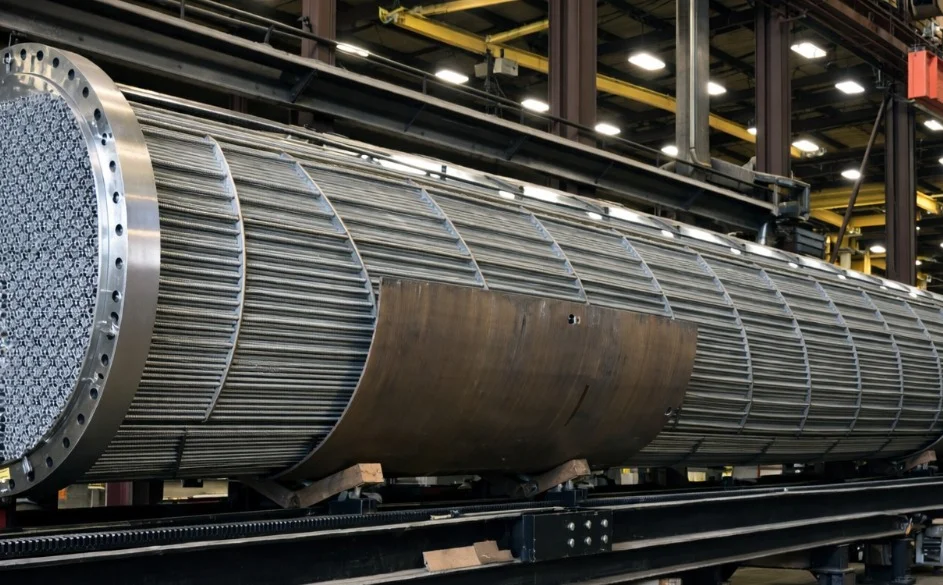
To help heavy industries navigate rising energy costs and strict environmental mandates, we offer precision-engineered regenerative heat exchangers tailored for the Italian industrial landscape.
From the chemical hubs of Lombardy to the major refineries and power plants across Italy, our state-of-the-art thermal storage systems are designed to capture up to 95% of waste heat from high-temperature exhaust gases. By utilizing alternating flow paths through advanced ceramic or alloy matrices, these systems maximize thermodynamic efficiency, radically lowering fuel consumption and greenhouse gas emissions.
Our deep engineering expertise spans critical sectors including Oil & Gas, heavy manufacturing, power generation, and chemical processing. Every energy recovery system we supply to the Italian market is custom-configured in our state-of-the-art facilities to withstand extreme pressures, thermal cycling stress, and highly corrosive, sour environments. Built in absolute compliance with local PED (Pressure Equipment Directive) regulations alongside global ASME Section VIII, API, and ISO standards, Nordstone systems bring unparalleled operational reliability to your plant.
Whether your facility requires fixed-bed matrix units for cyclic processes or large-scale rotary regenerators, our engineers deliver optimized thermal solutions designed for seamless site integration. Discover how our 20 years of manufacturing excellence can optimize your operational overhead by visiting our dedicated engineering portal to consult with our thermal design specialists or request a detailed technical proposal through our Contact Us page today.
Frequently Asked Questions (FAQ)
1. What is a regenerative heat exchanger, and how does it differ from a recuperative system?
A regenerative heat exchanger uses a single flow path containing a solid thermal storage matrix (such as structured ceramic blocks or metal mesh) that alternately absorbs heat from a hot gas stream and releases it to a cold gas stream. In contrast, a recuperative system (like a shell-and-tube or plate heat exchanger) features separate, simultaneous flow paths where heat transfers continuously through a static physical wall.
2. What thermal efficiency can Italian industries expect from Nordstone regenerative heat exchangers?
Nordstone premium energy recovery systems achieve thermal efficiencies ranging from 90% to 95%. Because the heat transfer matrix reaches near-thermal equilibrium with the incoming waste gas stream, it recovers far more energy than conventional recuperative systems, which are typically limited to 60–70% efficiency in high-temperature applications.
3. Which industrial sectors in Italy benefit most from these energy recovery systems?
Our systems are primarily designed for high-temperature, gas-based industrial environments across Italy, including:
- Oil & Gas Refineries: Preheating combustion air for large process furnaces.
- Chemical & Petrochemical Plants: Thermal management in volatile organic compound (VOC) abatement and reactors.
- Power Generation: Air preheaters for large industrial boilers and gas turbines. www.tipoheatexchangers.com
- Heavy Manufacturing: Metallurgy, glass furnaces, and cement kilns.
4. Are Nordstone heat exchangers compliant with Italian and European pressure equipment regulations?
Yes. All Nordstone equipment bound for Italy is engineered and certified under the European PED (Pressure Equipment Directive) 2014/68/EU and carries the CE mark. Additionally, we manufacture in strict compliance with international benchmarks including ASME Section VIII (Div. 1 & 2), TEMA standards, and API codes.
5. What types of regenerative heat exchangers do you manufacture?
We specialize in two primary configurations:
- Fixed-Bed (Static) Regenerators: Utilize multiple vessels packed with ceramic or metallic matrices where automated switching valves alternate the hot and cold gas streams.
- Rotary Regenerators (Air Preheaters): Feature a continuously rotating thermal matrix wheel that physically spins between adjacent hot exhaust and cold air intake ducts. www.tipoheatexchangers.com
6. How do Nordstone systems handle extreme thermal cycling and thermal shock?
With 20 years of engineering experience, we select materials with exceptionally low coefficients of thermal expansion, such as specialized cordierite, silicon carbide, or high-nickel alloys. Our structural casings are designed with advanced stress-relief points determined through Finite Element Analysis (FEA) to endure rapid temperature swings without mechanical failure.
7. Can these systems be integrated into existing plants in Italy?
Absolutely. Our engineering team specializes in custom retrofits. We perform detailed Computational Fluid Dynamics (CFD) modeling of your current exhaust layout to design a skid-mounted or modular heat exchanger package that integrates into your existing ductwork with minimal downtime.
8. What materials of construction do you use for highly corrosive or sour gas environments?
For demanding conditions, we build industrial vessels and matrix supports using advanced materials, including:
- Stainless Steels: SS316L, Duplex, and Super Duplex.
- Exotic Alloys: Inconel, Monel, and Hastelloy. nordstoneng.com
- Coatings: Internal linings such as specialized glass flakes or phenolic coatings for aggressive acid flue gases.
9. How do regenerative systems lower carbon emissions for Italian companies?
By capturing waste heat and using it to preheat incoming combustion air or process gases, the total fuel required by your industrial boilers or furnaces drops proportionally. A 90%+ thermal recovery rate directly equates to reduced fossil fuel combustion, significantly lowering your facility’s CO2 and NOx footprint to help meet EU climate mandates.
10. How does Nordstone prevent or manage particulate fouling within the heat matrix?
Fouling is managed through a combination of upfront engineering and active cleaning systems. We design optimized honeycomb matrix channels that discourage particle accumulation and equip our units with automated soot blowers or high-pressure cleaning cycles to clear particulates without halting plant operations.
11. What parameters are needed to get a custom thermal design and quote?
To engineer an optimized solution, our technical team requires:
- Hot and cold fluid compositions (typically flue gas and air).
- Mass flow rates for both streams.
- Inlet temperatures and target outlet temperatures.
- Allowable pressure drop (ΔP) constraints across the system.
- Space/footprint limitations at your Italian facility.
12. What is the typical return on investment (ROI) for a premium Nordstone energy recovery system?
Due to the sheer volume of fuel saved, most medium-to-large industrial installations in Italy realize a full capital ROI within 12 to 24 months. Our engineers provide a comprehensive thermal savings projection during the early design phase to clarify your exact payback window.
13. Do you provide ongoing maintenance and field support within Italy?
Yes. Nordstone provides comprehensive lifecycle support. From initial supervisory installation and commissioning to routine maintenance inspections, non-destructive testing (NDT), and spare parts supply, our engineering network supports Italian operators continuously.
14. What pressure ranges can your custom industrial vessels and heat exchangers support?
Leveraging our extensive background in high-performance pressure vessel manufacturing, our systems can be engineered to operate safely from full vacuum conditions up to pressures exceeding 200 bar, depending on the specific process requirements of the application.
15. How do we initiate a project or request a technical consultation with Nordstone?
You can easily reach out to our engineering office by visiting our official website and filling out our secure contact portal at Contact Us. A dedicated thermal design engineer will review your processing metrics and respond within 24–48 hours to schedule a preliminary technical review.