As a premier name among reboilers and coil type heat exchangers manufacturers in Italy, Nordstone delivers compact, high-efficiency thermal solutions engineered for the most demanding industrial applications.
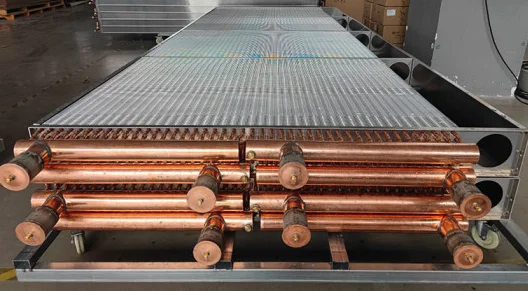
Designed to optimize heat transfer within a minimal physical footprint, our advanced helical and spiral coil configurations provide exceptional thermal performance for critical distillation, vaporization, and processing operations. Whether you are upgrading existing systems or developing a new project, our industrial vessels ensure maximum operational uptime and energy efficiency.
Backed by 20 years of experience in heavy industrial manufacturing, Nordstone combines precision engineering with rigorous quality control.
Our state-of-the-art facilities produce custom solutions capable of withstanding extreme pressures, volatile temperatures, and highly corrosive environments across the Oil & Gas, petrochemical, and Defence sectors. With strict adherence to API, ASME, and ISO certifications, we guarantee reliability and safety in every unit.
To discuss your project requirements or request a custom technical proposal, please visit our Contact Us page to connect with our engineering team.
Frequently Asked Questions (FAQ)
1. What are coil type heat exchangers, and how do they work?
Coil type heat exchangers consist of one or more spirally or helically wound tubes placed inside a shell or casing. Fluid flows through the tube coil while the service fluid passes over the outside, enabling rapid heat transfer within a highly compact space.
2. Why is Nordstone considered a leading reboiler manufacturer in Italy?
With over two decades of specialized experience, Nordstone delivers custom-engineered thermal solutions that meet stringent European and international standards. Our Italian and global clients trust us for our advanced engineering, certified manufacturing pipeline, and ability to handle complex, high-pressure applications.
3. What makes coil-type reboilers a “compact” solution?
The helical wrapping of the tubes maximizes the heat transfer surface area relative to the overall volume of the vessel. This allows a coil-type exchanger to deliver the same thermal capacity as a traditional straight shell-and-tube exchanger while occupying up to 70% less physical space.
4. For which industries are these thermal solutions best suited?
Our high-performance reboilers and exchangers are designed for critical applications in:
- Oil & Gas (Upstream and Downstream)
- Petrochemical and Chemical Processing
- Defence and Heavy Industrial Manufacturing
- Pharmaceutical and Power Generation
5. What certifications do Nordstone industrial vessels hold?
Every vessel and heat exchanger we manufacture complies with major international regulatory frameworks. We hold active certifications including ASME (Section VIII), API standards, and ISO quality management system benchmarks.
6. Can your reboilers handle corrosive or aggressive chemical media?
Yes. We specialize in metallurgy for extreme environments. Depending on your process requirements, we manufacture coils and shells from high-grade stainless steel, duplex, super duplex, titanium, and specialized nickel alloys to prevent corrosion and premature wear.
7. How do coil type heat exchangers improve thermal efficiency?
The curved geometry of the coil induces secondary fluid flow patterns known as “Dean vortices.” This natural turbulence increases the heat transfer coefficient on the tube side far more effectively than straight tubes, minimizing thermal resistance.
8. Does Nordstone provide custom-engineered solutions?
Absolutely. We do not believe in one-size-fits-all engineering. Our in-house thermal and mechanical engineers custom-design each reboiler’s dimensions, coil configurations, and pressure ratings based on your specific process fluids, flow rates, and thermal loads.
9. How do these units perform under high-pressure and high-temperature conditions?
Because the helical coil design naturally absorbs thermal expansion and mechanical stress without the need for expansion joints, our coil-type units offer exceptional structural resilience against thermal cycling and extreme pressure variations.
10. What are the maintenance requirements for a coil-type reboiler?
Due to high fluid turbulence which naturally minimizes fouling and scaling, these units generally require less frequent maintenance than standard configurations. When maintenance is required, the compact design allows for straightforward isolation and servicing.
11. Can these exchangers replace traditional shell-and-tube systems?
Yes, in most vaporization, condensation, and liquid-to-liquid applications where space is limited, energy efficiency targets are aggressive, or thermal stress is an issue, coil type exchangers serve as an ideal, modern upgrade.
12. How does Nordstone ensure quality control during fabrication?
Our quality assurance protocol includes non-destructive testing (NDT) such as radiographic, ultrasonic, magnetic particle, and liquid penetrant testing, followed by rigorous hydrostatic and pneumatic pressure testing to validate shell and coil integrity.
13. What is the typical lead time for a custom reboiler manufactured in Italy?
Lead times vary depending on the complexity of the engineering design, material availability (e.g., exotic alloys), and current manufacturing capacity. Contact our sales department via our web portal for an accurate project timeline estimate.
14. Do you assist with regulatory compliance and documentation for European installations?
Yes, we provide comprehensive documentation packages with every delivery. This includes material test reports (MTRs), welding logs, NDT records, and CE/PED (Pressure Equipment Directive) compliance certifications required for operation within Italy and the broader EU.
15. How can I get a quote or start a technical consultation for my project?
You can initiate a technical consultation by submitting your process data sheets and project specifications through our secure Contact Us page. Our engineering team will review your parameters and follow up promptly.