As an established pioneer in heavy industrial fabrication, Nordstone stands at the forefront of premier tapping & charging system valves manufacturers in italy, delivering highly specialized, ultra-robust flow control and material isolation systems for severe-service metallurgical operations.
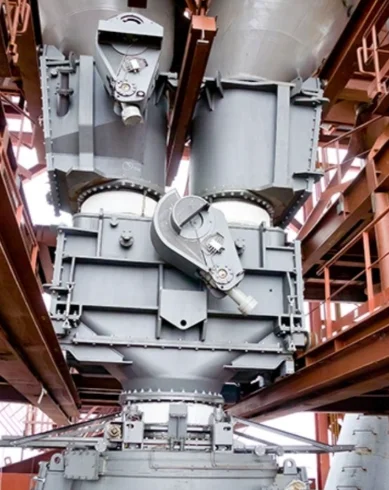
ultra-robust flow control and material isolation systems for severe-service metallurgical operations. Engineered to withstand intense radiant heat, extreme abrasive slurry friction, and volatile chemical reactions, our heavy-duty valve configurations manage critical material transfer points in blast furnaces, electric arc furnaces (EAF), and basic oxygen furnaces (BOF).
Drawing on over 20 years of expert engineering experience, our team specializes in the detailed mechanical design and structural fabrication of advanced furnace-interface assemblies—including material charging gate valves, slag splashing valves, alloy addition control valves, and emergency furnace isolation dampers optimized to perform flawlessly under relentless thermal shock conditions.
Our state-of-the-art manufacturing facility combines advanced automated welding overlays with premium certified metallurgy to construct durable valve housings and moving components that eliminate thermal distortion and survive continuous contact with hot, abrasive dust and raw metallurgical feedstocks.
Every customized tapping and charging valve system is engineered with integrated water-cooling circuits, high-density erosion-resistant linings, and heavy-duty hydraulic or pneumatic actuation packages designed for precise, rapid cycling within volatile plant environments.
By maintaining uncompromising compliance with critical international and European engineering benchmarks—including ASME Section VIII, EN 12516, CE marking, and the European Pressure Equipment Directive (PED 2014/68/EU)—Nordstone guarantees unmatched operational safety, maximized furnace uptime, and exceptional structural longevity for Italy’s primary steel production and heavy foundry infrastructures.
To collaborate with our senior metallurgical flow control engineering team on your custom furnace tapping or raw material charging specifications, please visit our contact page.
Technical FAQ (Top 15)
Q1: What unique operational demands do tapping & charging system valves manage?
These valves manage some of the most destructive environments in heavy industry. Charging valves must handle regular high-impact, mechanical abrasion from falling raw materials (coke, iron ore, scrap) and exposure to intense upstream thermal radiation, while tapping-related valves handle volatile gas backpressures, extreme slag accumulation, and radiant temperatures fluctuating near molten metal levels.
Q2: What major manufacturing codes and safety certifications do your tapping and charging valves carry?
All Nordstone metallurgical valves are engineered to meet rigid global safety mandates. For projects in Italy and across Europe, our equipment carries the CE marking in strict compliance with the Pressure Equipment Directive (PED 2014/68/EU) and standard EN 12516 (Valves – Shell design strength), alongside fabrication alignments with ASME Section VIII codes.
Q3: How does Nordstone prevent mechanical jamming caused by abrasive dust accumulation?
Our charging and tapping system valves feature advanced self-cleaning mechanics and physical scrapers built directly into the valve gate or disc geometry. As the valve cycles, these heavy-duty mechanical edges displace hard particulate cakes, dust crusts, and loose sinter particles from the sealing seats to maintain absolute mechanical clearance.
Q4: What type of metallurgy is utilized for valves handling high-temperature abrasive media?
We construct our primary valve bodies from high-tensile, heat-resistant carbon or boiler steels (such as P355NH or 16Mo3). For surfaces in direct contact with sliding abrasive raw materials or aggressive hot gases, we apply automated hard-facing weld overlays utilizing premium Stellite, chromium carbide, or tungsten carbide claddings.
Q5: How do your valves withstand intense radiant heat fields from open furnace mouths?
To maintain structural integrity and prevent thermal warping, our high-exposure tapping and charging valves incorporate internal forced-circulation water cooling manifolds. These heavy-duty cooling paths are optimized through Computational Fluid Dynamics (CFD) to ensure continuous, uniform heat extraction across the valve blade and seat frames.
Q6: What types of actuation systems are used for high-stakes furnace interface valves?
We equip our valves with heavy-duty hydraulic cylinders or robust pneumatic actuators from premier European manufacturers, configured with high-torque mechanical linkages. These packages are engineered to deliver maximum breakout force to slice through material obstructions during emergency close cycles.
Q7: Are your tapping and charging system components certified for explosive ATEX zones?
Absolutely. Because steel mill charging zones often present high concentrations of explosive dust and carbon monoxide gases, all integrated electrical components—including proximity sensors, limit switches, solenoids, and junction boxes—are fully ATEX-certified for Zone 1 and Zone 2 hazardous areas.
Q8: Can Nordstone customize valve dimensions to match older, non-standard furnace formats?
Yes. Leveraging our state-of-the-art manufacturing facility and custom design engineering team, we routinely design and fabricate bespoke valve sizes and flange profiles extending up to several meters in diameter, ensuring perfect alignment with existing structural drop-chutes or furnace hoods in historical Italian mills.
Q9: How is zero-atmospheric leakage achieved during charging operations?
We utilize specialized multi-layered packing configurations and mechanical labyrinth seals around moving valve shafts. For toxic or combustible gas streams, our valve bodies can be equipped with an active inert gas purging system (utilizing nitrogen injection) to maintain a continuous positive pressure barrier against external gas migration.
Q10: What non-destructive testing (NDT) protocols are implemented during fabrication?
In strict compliance with our ISO 9001 quality systems, all pressure-containing and structurally critical welds undergo exhaustive NDT tracking. This includes 100% Radiographic Testing (RT) on primary joints, Ultrasonic Testing (UT), and Magnetic Particle Testing (MT), followed by witnessed high-pressure shell and seat leakage tests.
Q11: How do your valve electronics interface with a foundry’s master automation platform?
Our automated valve systems feature smart field junction boxes or dedicated control blocks built around open-architecture PLCs (such as Siemens S7-1500). We configure the communication layers to support native industrial protocols like Modbus TCP, Profinet, or Profibus DP, providing real-time telemetry regarding valve position, oil/air pressure, and interlock tracking back to your central SCADA or DCS.
Q12: Do you offer Factory Acceptance Testing (FAT) at your facility in Italy?
Yes. Every tapping and charging valve configuration undergoes rigid Factory Acceptance Testing prior to shipment. Your engineering representatives or designated third-party inspection bodies are given full access to witness dimensional verification, electrical loop checks, automated sequence timing, water-loop pressure testing, and structural sealing verification.
Q13: Which third-party inspection and classification societies do you regularly partner with?
We regularly coordinate our material traceability logs, welding procedure qualifications (WPQR), and final safety certifications with leading notified bodies active in the European heavy industrial sector, including RINA, Bureau Veritas, and TÜV.
Q14: What baseline data does your team require to draft a precise engineering proposal?
To compile an accurate technical proposal, please supply the nominal pass dimensions, exact characteristics of the handled material (grain size, hardness, density), operating and ambient temperature boundaries, expected dust loading levels (mg/Nm3), preferred actuation method, and dimensional space constraints.
Q15: How can a procurement manager or metallurgical project engineer initiate a valve project with Nordstone?
You can securely upload your technical specifications, piping layout coordinates, or equipment data sheets through our secure corporate interface. To arrange an initial technical consultation with our senior flow control and thermal engineers, please connect with us directly via our contact page.