As an established leader in heavy industrial fabrication, Nordstone specializes in the custom design and manufacturing of high-performance hot water boilers and high-efficiency thermal heating solutions across Italy.
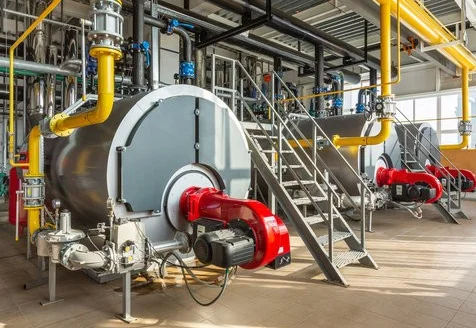
Engineered to endure continuous thermal cycles, extreme pressures, and harsh operating environments, our heavy-duty boiler systems provide reliable heating infrastructure for critical applications where downtime is not an option—including district heating networks, chemical processing plants, large-scale commercial complexes, and defense installations.
Drawing on over 20 years of expert engineering experience, our team designs fire-tube and water-tube configurations optimized for maximum fuel utilization, reduced operational overhead, and low emission output.
Our state-of-the-art manufacturing facility combines precision mechanical engineering with advanced welding automation to construct durable boiler bodies that eliminate thermal fatigue and resist corrosive condensate environments. Every industrial boiler package is engineered to integrate seamlessly with high-efficiency economizers, variable speed circulating pumps, and smart control systems, delivering a compact footprint with rapid thermal responsiveness. By strictly maintaining compliance with critical international and European engineering benchmarks—including ASME Section IV, EN 12953, CE marking, and the European Pressure Equipment Directive (PED)—Nordstone guarantees unmatched operational safety, structural longevity, and thermal reliability for Italy’s primary heating infrastructures.
To collaborate with our senior thermodynamic engineering team on your custom boiler specifications or to request a comprehensive technical proposal, please visit our contact page.
Technical FAQ (Top 15)
Q1: What types of industrial hot water boilers does Nordstone manufacture in Italy?
We design and fabricate high-capacity industrial hot water boilers, including packaged fire-tube boilers for standard process heating and custom-engineered water-tube boilers for high-pressure, high-temperature utility applications. We also specialize in waste heat recovery boilers that capture thermal energy from industrial exhaust gases.
Q2: How do your hot water boilers achieve high energy efficiency?
Our thermal heating solutions integrate advanced heat-recovery technologies, such as flue-gas economizers and multi-pass thermodynamic designs, along with high-density structural insulation. These features extract maximum energy from combustion gases, lifting overall thermal efficiency up to 95%.
Q3: Which regulatory codes and certifications cover your hot water boiler systems?
All Nordstone boiler systems are built to rigid European safety mandates. Depending on your installation parameters, our hot water boilers carry the CE marking under the Pressure Equipment Directive (PED 2014/68/EU) and are designed in strict accordance with EN 12953 or ASME Section IV (Heating Boilers) standards.
Q4: Can your burner configurations handle alternative, low-carbon fuels?
Yes. Our hot water boilers can be integrated with advanced low-NOx industrial burners configured for standard natural gas, liquefied petroleum gas (LPG), or alternative sustainable fuels such as biogas and green hydrogen blends, ensuring alignment with European decarbonization goals.
Q5: What materials are utilized to prevent corrosion and thermal fatigue in the boiler?
We utilize certified, high-grade boiler steel plates and seamless pressure tubes specifically rated for high-temperature fluid service. For aggressive condensate return loops or specific process fluids, we incorporate premium alloy and stainless steel trims to prevent pitting, scaling, and localized hot spots.
Q6: Are Nordstone hot water boilers delivered as fully integrated, turnkey packages?
Yes. Every hot water boiler is assembled as a turnkey modular package. We integrate the primary boiler pressure vessel with high-efficiency circulating pumps, water conditioning loops, safety relief valves, and a centralized control panel featuring dedicated Programmable Logic Controllers (PLCs).
Q7: How do your boiler designs manage thermal shock from cold water returns?
Our internal engineering designs incorporate specialized internal water distribution headers and blending loops. This ensures that cold return water is thoroughly mixed with hotter internal boiler water before contacting the high-temperature furnace walls, completely mitigating the risk of thermal shock and structural cracking.
Q8: Can your hot water boilers operate safely without continuous manual supervision?
Absolutely. We equip our thermal systems with redundant electronic safety arrays and monitoring instrumentation that comply fully with European directives for 24-hour or 48-hour unsupervised continuous operation, providing automatic shutdown protocols if pressure or temperature boundaries are crossed.
Q9: What quality control and non-destructive testing (NDT) protocols do you implement?
In strict compliance with our ISO quality systems, all structural and pressure welds undergo rigorous NDT verification. This includes Radiographic Testing (RT), Ultrasonic Testing (UT), Magnetic Particle Testing (MT), and prolonged hydrostatic pressure testing up to 1.5 times the maximum allowable working pressure.
Q10: How does Nordstone optimize the physical footprint of large industrial heating boilers?
Our engineering department utilizes advanced 3D CAD modeling and finite element analysis (FEA) to arrange the boiler body, burner, piping, and accessories compactly. This modular approach significantly minimizes cleanroom or boiler room footprint constraints while keeping maintenance access points highly accessible.
Q11: Can your boiler control panels interface with our centralized plant SCADA network?
Yes. Our automated control panels utilize open industrial automation protocols. We program our PLC networks to interface natively via Modbus TCP, Profinet, or Ethernet/IP, giving your central control room comprehensive real-time telemetry, temperature logging, and safety diagnostic access.
Q12: Do you offer Factory Acceptance Testing (FAT) before delivery in Italy?
Yes. Every hot water boiler undergoes comprehensive Factory Acceptance Testing at our production center. Clients or nominated third-party inspectors are provided full facility access to witness live hydro-testing, electrical loop checking, safety interlock trips, and functional automated sequence validations.
Q13: Which third-party inspection bodies do you regularly collaborate with in Italy?
We regularly coordinate our testing and verification protocols with major global classification societies operating within Italy, including RINA, Bureau Veritas, TÜV, and Lloyd’s Register, ensuring completely unbiased compliance documentation.
Q14: What baseline technical parameters does your team require to compile a technical quote?
To engineer a precise proposal, please share your required heat output (in kW or MW), required operating pressure, target water inlet and outlet temperatures, fuel type, site electrical classification, and any specific localized clean-air emission limits.
Q15: How can a facility engineer or procurement manager initiate a hot water boiler project?
You can securely upload your technical datasheets, operational parameters, or RFP guidelines directly through our secure digital intake network. To schedule an initial technical discovery session with our senior thermal engineers, please connect via our contact page.