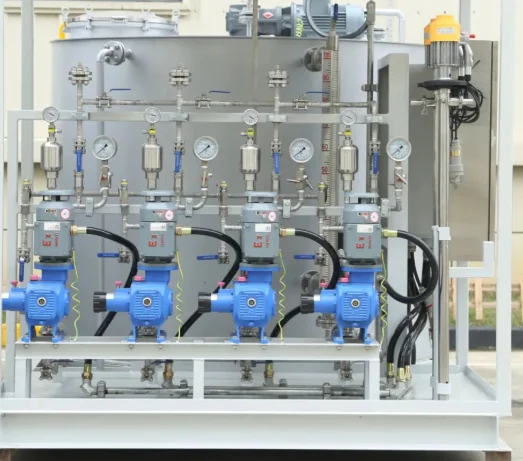
As a premier modular process solutions manufacturer in Italy, we specialize in integrating complex piping, pressure vessels, and automated control systems into compact, fully tested, and ready-to-install units. Our advanced modular design approach allows for simultaneous off-site fabrication and on-site infrastructure upgrades, significantly reducing project timelines and operational risks. By leveraging our deep expertise in precision engineering and adherence to rigorous ASME, API, and ISO certifications, we provide custom-built skids that thrive under extreme temperatures, pressures, and corrosive conditions.
Whether you require a specialized filtration unit, a chemical reactor skid, or a complete modular refining system, Nordstone ensures unrivaled reliability, safety, and operational efficiency for your critical processing applications.
Contact our engineering team today to discuss your project requirements.
Frequently Asked Questions (FAQ)
1. What are modular process skids?
Modular process skids are self-contained systems built within a structural frame. They house essential process equipment—such as pumps, valves, sensors, and vessels—to perform a specific industrial function as a single, portable unit.
2. Why choose Nordstone for modular skids in Italy?
With over 20 years of experience, Nordstone combines Italian engineering precision with global industry standards (ASME, API, ISO). We deliver fully tested, “plug-and-play” solutions that minimize site installation time.
3. What industries do you serve?
We serve a broad spectrum of industries, including Oil & Gas, chemical manufacturing, petrochemical refining, power generation, and water treatment.
4. What are the key advantages of modular construction over stick-built?
Modular construction allows for parallel fabrication (building the skid while the plant site is prepared), which drastically reduces downtime, improves quality control in a factory setting, and enhances safety by minimizing on-site construction hours.
5. Do your skids meet international certification standards?
Yes, our manufacturing processes strictly adhere to ASME, API, and ISO standards to ensure the highest levels of safety and quality for critical industrial applications.
6. Can you design custom skids for corrosive environments?
Absolutely. We specialize in using advanced, corrosion-resistant materials and coatings tailored to withstand the harsh chemical and temperature conditions inherent in petrochemical processing.
7. How does the Factory Acceptance Testing (FAT) process work?
Before leaving our facility, every skid undergoes rigorous FAT to ensure all systems, controls, and components function correctly, ensuring a seamless startup once delivered to your site.
8. What is the typical lead time for a custom process skid?
Lead times vary based on project complexity and specifications. Our team works closely with you to establish a timeline that aligns with your operational milestones and shutdown schedules.
9. Are these units easily transportable?
Yes, the primary advantage of a skid-mounted system is its portable design. Each unit is engineered for safe transport and rapid integration into existing plant infrastructure.
10. Does Nordstone provide support during on-site installation?
Yes, we provide comprehensive documentation, startup assistance, and technical support to ensure your modular system integrates perfectly into your facility.
11. Can multiple skids be combined into a larger process system?
Certainly. Our modular philosophy allows us to design individual skids that work in tandem, creating a scalable, interconnected process unit or an entire portable plant.
12. How do you handle automation and instrumentation?
We integrate state-of-the-art automated control systems directly into the skid, ensuring full compatibility with your plant’s existing Distributed Control System (DCS) or PLC architecture.
13. What is the “small footprint” advantage?
By layering equipment within a vertical frame, we optimize space. This is critical for brownfield projects where floor space is limited and expansion is necessary.
14. What materials do you use for pressure vessels?
We use a wide range of certified high-grade steel and alloys, selected based on the pressure, temperature, and chemical compatibility requirements of your specific application.
15. How can I request a quote for my project?
Please visit our contact page to provide your technical specifications, and one of our expert engineers will get in touch to discuss your requirements.