As leading dehydration columns drying columns manufacturers in Italy, Nordstone combines 20 years of precision engineering experience with state-of-the-art fabrication to support the continent’s most demanding refining, petrochemical, and industrial operations.
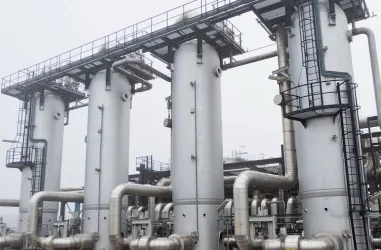
Our custom-engineered industrial vessels provide high-efficiency thermal and physical moisture separation, performing reliably under extreme structural loads, corrosive inputs, and intense cyclic temperatures. By adhering to international compliance frameworks including ASME Section VIII Div.
1 & 2, API, and Europe’s PED (Pressure Equipment Directive), we guarantee unparalleled mechanical reliability and separation efficiency. From specialized glycol dehydration packages to multi-bed molecular sieve towers, Nordstone develops tailored solutions that minimize energy expenditure while maintaining downstream pipeline specifications.
Discover how our Italian engineering capabilities optimize process runtimes across oil & gas, defense, and heavy manufacturing sectors by reviewing our structural configurations, or contact our engineering division directly via our Contact Us portal for technical specifications.
Frequently Asked Questions
1. What custom design standards do you follow for dehydration and drying columns in Italy?
We design and manufacture all industrial columns in strict compliance with the ASME Section VIII (Div. 1 & Div. 2) codes, API 12J guidelines, and ISO standards. For industrial facilities operating throughout Italy and the European Union, we guarantee full compliance with the mandatory Pressure Equipment Directive (PED) 2014/68/EU alongside CE marking protocols.
2. What types of industrial drying columns does Nordstone manufacture?
Our 20 years of manufacturing experience spans an array of custom-built process columns:
- Glycol Dehydration Towers: Designed for natural gas drying using TEG (Triethylene Glycol) or DEG systems.
- Molecular Sieve Adsorbers: Engineered for extreme-dry downstream specifications (solid-bed adsorption).
- Desiccant Drying Vessels: Custom-built for processing compressed air, industrial gases, and chemical solvents.
- Fractionation & Stripping Columns: Integrated systems optimized for fluid and gas purification.
3. Which engineering materials do you use for highly corrosive processing environments?
We process heavy-gauge materials matching the complex fluid chemistry of your application. Our metallurgical capabilities include:
- Carbon Steel & Low-Temperature Carbon Steel (LTCS) (e.g., SA 516 Gr. 70, SA 350 LF2). nordstoneng.com
- Austenitic & Duplex Stainless Steels (SS304, SS316L, Duplex 2205, Super Duplex).
- Exotic Alloys: Pure Titanium fabrication, Hastelloy, Inconel, and Monel.
- Protective Linings: Corrosion-resistant weld overlays (cladding), phenolic linings, and specialized internal epoxy barriers.
4. How do you optimize internal mass transfer inside your dehydration columns?
Our engineering team utilizes Computational Fluid Dynamics (CFD) simulations to map internal flow dynamics precisely. Depending on the process specifications, we configure our drying columns with high-efficiency structured packing, random packing, customized bubble-cap trays, or valve trays to achieve maximum vapor-liquid contact while preventing fluid channeling.
5. Can Nordstone build columns that withstand extreme pressures and thermal loads?
Yes. Our heavy-wall pressure vessels are engineered to operate smoothly across a wide operational spectrum, coping with internal design pressures from full vacuum up to 200 bar, and operating temperatures ranging from cryogenic levels (-50°C) up to high-temperature hydrocarbon exposure (+400°C).
6. Do you supply turnkey skid-mounted dehydration systems to Italian industrial sites?
Yes, we specialize in the engineering of fully integrated, shop-fabricated, and factory-tested process skids. Our custom dehydration packages arrive complete with the primary tower, integrated heat exchangers, reboilers, interconnected process piping, instrumentation, and PLC automation architectures to guarantee rapid, drop-in site deployment.
7. What testing and quality control protocols do you run on these columns?
Every single column undergoes strict non-destructive evaluation (NDE) in-house. This testing matrix encompasses:
- Volumetric & Surface NDT: Radiographic Testing (RT), Ultrasonic Testing (UT), Magnetic Particle Inspection (MPI), and Dye Penetrant Testing (DPT).
- Pressure Testing: High-pressure hydrostatic testing and pneumatic leak detection. nordstoneng.com
- Material Traceability: 100% verifiable Mill Test Certificates (MTCs) confirming full trace capability from origin.
8. How does Nordstone support the unique operational demands of the Italian Oil & Gas sector?
We engineer custom solutions built specifically to handle sour gas environments and high-salinity maritime conditions. Our units fully satisfy NACE MR0175 / ISO 15156 and NACE MR0103 guidelines, utilizing specialized materials and manufacturing methods to prevent sulfide stress cracking and hydrogen-induced cracking (HIC).
9. Can your drying columns be integrated into chemical or defense production systems?
Absolutely. Backed by over twenty years of experience creating specialized solutions for the defense and chemical sectors, we design heavy-duty equipment to safely isolate, contain, and process highly volatile chemicals, explosive gas blends, and sensitive industrial ingredients under severe operating limits.
10. How do you prevent internal gas mist carryover in your dehydration vessels?
To ensure complete liquid-gas separation before the treated gas exits the vessel, we install advanced separation internals. These include premium multi-tier demister pads (mesh pads), high-velocity vane packs, or internal cyclone clusters configured to trap microscopic entrained droplets.
11. Do you supply engineering support and mechanical design documentation?
Yes. Every project includes a complete engineering documentation package. This includes precise mechanical design calculations executed via PV Elite or COMPRESS software, comprehensive General Arrangement (GA) drawings, detailed fabrication files, and approved welding profiles (WPS, PQR, WPQ).
12. What is the standard turnaround time for a custom dehydration column?
Delivery schedules vary according to column sizing, layout complexity, and material selections (such as standard carbon steel vs. exotic cladded alloys). Because our integrated facility houses precision CNC machining, rolling, welding, and heat-treating assets under one roof, we consistently deliver projects faster than the industry average.
13. Do your designs account for localized seismic and environmental stresses in Italy?
Yes. Every vessel is custom-engineered to withstand the unique environmental profile of its installation site. We apply rigorous cyclic fatigue, seismic load, and localized wind-load calculations in strict alignment with regional Eurocodes and Italian construction laws to guarantee structural stability.
14. What after-sales engineering services do you provide within Italy?
Nordstone maintains a comprehensive international technical support network. We provide remote engineering consultations, field installation guidance, commissioning support, and supply certified replacement internal components (including packing sets, trays, and mist eliminators) to ensure long-term operational efficiency.
15. How can I request a technical quote for a drying column project?
You can collaborate directly with our engineering department by visiting our specialized intake system at Contact Us. Please share your specific process parameters—including volumetric flow rates, operating temperatures, pressures, and gas composition data—and our technical team will deliver a comprehensive proposal.