
With over 30 years of industrial excellence, Nordstone specializes in designing and manufacturing high-performance direct contact heat exchangers for critical operations across Italy.
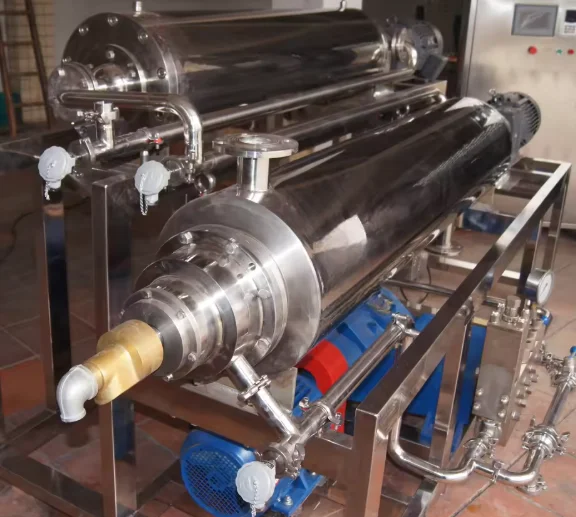
Unlike traditional surface heat exchangers, our direct contact systems enable two fluid streams to mix completely, eliminating the thermal resistance of a tube wall and maximizing energy efficiency. Engineered at our state-of-the-art facilities, these units are purpose-built to withstand extreme temperatures, pressures, and highly corrosive fluids typical in the Oil & Gas, heavy chemical, and power generation sectors. Our team of expert engineers custom-tailors every thermal system to optimize latent heat recovery, vapor condensation, and industrial gas scrubbing.
Every custom direct contact system complies with rigorous global engineering certifications, including ASME Section VIII, API, and ISO standards, ensuring unmatched operational reliability and long-term durability in the most demanding industrial environments.
For tailored high-efficiency thermal engineering queries or to discuss specific compliance guidelines for your industrial facility, visit our specialized team via our Contact Us page.
Frequently Asked Questions (FAQ)
1. What is a direct contact heat exchanger, and how does it work?
A direct contact heat exchanger is a specialized thermal management system where two fluids of different temperatures (typically a gas and a liquid) directly mix to exchange heat. Because there is no solid barrier or tube wall separating the fluids, heat transfer occurs directly through interface mass and thermal exchange, achieving near-zero approach temperatures and exceptionally high efficiency.
2. What are the main benefits of direct contact systems compared to shell and tube designs?
Direct contact systems completely eliminate fouling, scaling, and thermal resistance caused by internal pipe or plate barriers. This results in significantly lower capital costs, lower maintenance requirements, smaller equipment footprints, and a much higher heat transfer coefficient per unit volume.
3. Which industrial sectors in Italy utilize Nordstone’s direct contact heat exchangers?
Our systems are heavily utilized throughout Italy’s robust industrial sectors, including Oil & Gas processing, petrochemical refining, geothermal energy exploitation, carbon capture facilities, thermal desalination plants, and specialized defense infrastructure applications.
4. Can direct contact heat exchangers handle corrosive or highly viscous fluids?
Yes. Since there are no complex, tight tube bundles or delicate plates to clog or erode, direct contact units are exceptionally resilient against high particulate loading, heavy sludges, and corrosive chemical streams that would rapidly degrade traditional heat exchangers.
5. What specific types of direct contact heat exchangers does Nordstone manufacture?
We engineer and manufacture a diverse range of configurations, including barometric condensers, spray columns, packed bed towers, baffle-tray columns, and open-channel bubble-column drop-shaping vessels tailored to specific mass-transfer requirements.
6. What manufacturing standards and certifications do your thermal vessels carry?
Every vessel and heat transfer unit engineered by Nordstone is fully certified to meet major international standards. Depending on project specifications, our units carry valid ASME Section VIII (Div 1 & 2), API 650/660, ISO 9001, and European PED (Pressure Equipment Directive) compliance marks necessary for operation within Italy.
7. How does Nordstone guarantee 20+ years of operational durability for these systems?
Our engineering longevity stems from a combination of strict metallurgical selection (such as high-grade stainless steel, duplex, super-duplex, or custom anti-corrosion linings), advanced finite element analysis (FEA), and rigorous non-destructive testing (NDT) before factory dispatch.
8. Can these units be integrated into existing modular skid packages?
Absolutely. Nordstone specializes in fabricating complete, pre-engineered modular skid systems. We can mount the direct contact vessel along with all necessary pumps, control instrumentation, automation valves, and structural frameworks for rapid plug-and-play installation on-site.
9. What is the role of these exchangers in industrial energy and waste heat recovery?
They are highly effective for capturing latent heat from low-pressure exhaust steam or dirty industrial flue gases. By spraying cooler process water directly into the gas stream, industries can recover significant thermal energy that would otherwise be lost to the atmosphere.
10. How does Nordstone manage quality control during the manufacturing process?
Our state-of-the-art facility utilizes an in-house QA/QC protocol. This involves material traceability verification, ultrasonic and radiographic weld testing, hydro-testing at extreme pressure differentials, and strict compliance verification at every stage of fabrication.
11. Is it possible to separate the two fluids after the heat transfer process is complete?
Yes. If the fluids are immiscible (such as oil and water) or consist of a gas and a liquid, they naturally separate inside the vessel via gravitational settling or structured demister pads, allowing for separate collection streams downstream.
12. What are the pressure and temperature limits for a custom direct contact vessel?
Because each unit is custom-built by our engineers, we design our vessels to meet your exact process conditions. Utilizing thick-walled ASME-certified construction, our systems can reliably sustain extreme operating limits, vacuum conditions, and high thermal shocks.
13. How do barometric and jet condensers function within this category?
Barometric and jet condensers use a cooling liquid spray to instantly condense incoming process vapors through direct contact. The condensation creates a natural vacuum within the vessel, which optimizes process cycles in evaporation and distillation columns without needing mechanical vacuum pumps.
14. What maintenance is required for a direct contact heat transfer system?
Maintenance is minimal because there are no internal tubes to clean, retube, or patch. Periodic inspections usually involve checking the spray nozzles for particulate blockages and validating the structural integrity of internal packing media or tray arrangements.
15. How can I get a custom thermal design and price quotation from Nordstone?
You can connect directly with our engineering and technical sales department by visiting our dedicated Contact Us page. Share your stream composition, flow rates, and thermal targets, and our team will design an optimized solution for your Italian facility.