For over 30 years, Nordstone has stood at the forefront of heavy industrial engineering, specialized in high-performance thermal design and heavy vessel manufacturing. As premier finned tube heat exchangers and reboilers manufacturers in Italy, we deliver advanced, custom-engineered systems designed to maximize thermal efficiency within critical industrial processing loops.
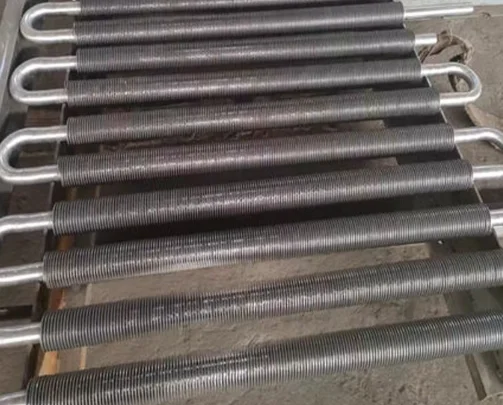
Our advanced configurations—engineered precisely to manage complex air and fluid systems—ensure stable vaporization and optimal heat flux under intense operating conditions. Serving a demanding industrial landscape spanning Oil & Gas, chemical processing, and heavy manufacturing across the Mediterranean, Nordstone combines state-of-the-art Italian production capabilities with rigorous mechanical testing.
From high-pressure distillation setups to specialized energy recovery networks, our heavy duty reboilers and finned tube configurations stand up to extreme chemical environments, severe thermal cycle stresses, and extreme operational pressures.
To discuss your specific project parameters, flow rates, or chemical metallurgy requirements with our senior engineering team, or to request a detailed technical proposal, visit our dedicated contact page at Contact Us.
Technical Specifications & Engineering Standards
Our manufacturing facility is equipped to process high-alloy metallurgies and execute precise fin-to-tube bonding, ensuring long-term mechanical reliability and maximum heat transfer coefficients.
| Parameter | Standard Range / Capability |
|---|---|
| Certifications & Codes | ASME Section VIII Div. 1 & 2, API 661, API 660, ISO 9001, PED 2014/68/EU |
| Core Materials | Carbon Steel, AISI 316L Stainless Steel, Duplex, Super Duplex, Inconel, Titanium |
| Fin Geometries | Helical high-fin, Crimped, Extruded, Embedded (G-type), L-Foot, and LL-Foot |
| Design Pressure Limits | Vacuum up to greater than 350 bar |
| Temperature Range | −196∘C (Cryogenic) up to +600∘C |
| Primary Industrial Markets | Petrochemical Refining, Marine Propulsion, Amine Regeneration, Power Generation |
Frequently Asked Questions (FAQ)
1. What core advantages do finned tubes offer over bare tubes in industrial reboiler systems?
Finned tubes significantly expand the external heat transfer surface area of a vessel—often by a factor of 10 to 20. In industrial reboilers where the fluid on the outside of the tubes (shell side) has a much lower heat transfer coefficient than the fluid or steam on the inside (tube side), adding fins balances the thermal resistance. This dramatically minimizes the overall footprint and weight of the vessel while maximizing total thermal efficiency.
2. Which international design codes and manufacturing certifications does Nordstone follow in Italy?
All reboilers and finned tube heat exchangers are designed, calculated, and manufactured in absolute compliance with global industrial benchmarks. Our baseline infrastructure supports ASME Section VIII Division 1 and Division 2, API 660, API 661 (for air-cooled configurations), and the European Pressure Equipment Directive (PED 2014/68/EU), backed by our ISO 9001 robust quality assurance matrix.
3. How does Nordstone prevent galvanic corrosion between the base tube and the fin material?
Galvanic corrosion occurs when two dissimilar metals interact in the presence of an electrolyte. We mitigate this risk through rigorous metallurgy selection and advanced mechanical bonding processes. For aggressive environments, we utilize extruded bimetallic fins where an aluminum outer fin completely covers and seals a corrosion-resistant base tube (such as stainless steel or Duplex), blocking moisture and chemical ingress at the interface.
4. What types of fin attachments do you manufacture for high-temperature fluid systems?
We manufacture several distinct fin attachments based on the mechanical stresses of your application:
- Embedded Fins (G-Type): Positioned into a machined groove on the tube wall, capable of resisting temperatures up to 400∘C.
- Extruded Fins: Formed directly from an outer aluminum muff tube, providing exceptional mechanical bond strength up to 300∘C.
- L/LL-Foot Fins: Wrapped tightly under tension around the base tube for lower temperature, cost-effective air-cooling loops.
- Welded/Crimped Fins: Designed for extreme duty cycles reaching up to 600∘C.
5. Can Nordstone custom-engineer reboilers for high-fouling hydrocarbon services?
Yes. Hydrocarbon distillation and heavy oil reboiling loops are highly prone to fouling. Our engineering team customizes tube layouts, pitch arrangements (square vs. triangular), and utilizes low-finned or optimized bare-tube zones within kettle-type configurations to minimize stagnation zones, reduce coke formation, and facilitate easier mechanical bundle cleaning during scheduled plant turnarounds.
6. What is the difference between a Kettle Reboiler and a Thermosiphon Reboiler in terms of finned tube application?
- Kettle Reboilers: Feature an oversized shell that acts as a vapor-liquid disengagement space, ensuring a dry vapor stream returns to the distillation column. They are ideal for high vaporization rates and heavily benefit from low-finned tubes to increase heat flux without vapor choking.
- Thermosiphon Reboilers: Rely entirely on natural density differentials to drive fluid circulation through the tubes. These systems require precise hydraulic calculations and typically utilize straight, smooth inner tubes with customized outer extensions depending on whether it is a horizontal or vertical configuration.
7. How does Nordstone ensure the structural integrity of welds under extreme pressures?
With over 20 years of experience handling critical industrial pressure vessels, our non-destructive testing (NDT) protocol is rigorous. Every high-pressure weldment undergo comprehensive testing sequences, including digital radiography (X-ray testing), ultrasonic inspection (UT), liquid penetrant testing (PT), and final hydrostatic pressure validation up to 1.5 times the maximum design pressure.
8. What materials are recommended for reboilers handling sour gas or amine regeneration?
Amine regeneration loops involve high risks of hydrogen stress cracking and wet H2S corrosion. For these specific applications in Italy and offshore markets, we utilize stabilized low-carbon steels with post-weld heat treatment (PWHT), or superior corrosion-resistant alloys such as AISI 316L, Duplex stainless steels, or specialized nickel alloys (Inconel 625/825) for high-temperature strips.
9. Why is the control of heat flux critical in finned tube reboilers?
If the heat flux (the rate of heat transfer per unit area) exceeds a specific critical limit, a phenomenon known as “film boiling” or “dryout” occurs. A continuous vapor blanket forms around the fins, insulating them from the liquid. This causes heat transfer rates to plummet instantly and can lead to rapid localized overheating, thermal stress fatigue, and mechanical failure of the tubes.
10. How does Nordstone handle shipping and mechanical logistics for oversized thermal vessels within Italy?
Our Italian logistics framework handles complete factory-to-site project management. For massive kettle reboilers or heavy air-cooled heat exchanger skids, we coordinate all special permits, police escorts for oversized road transports, and port logistics for maritime shipping from Italian ports directly to global or local refining sites.
11. Can you retrofit or replace existing finned tube bundles inside third-party heat exchangers?
Yes. A significant portion of our manufacturing involves engineering direct drop-in replacement bundles for aging or failing third-party heat exchangers across Italian chemical plants. We reverse-engineer existing physical dimensions, optimize the fin densities using modern thermal software, and deliver updated bundles designed to slide perfectly into original shells.
12. What role do finned tube heat exchangers play in industrial air-cooled fluid loops?
In regions with strict environmental regulations on water usage or limited water access, air-cooled heat exchangers (fin-fans) use ambient air to cool process fluids. The process fluid flows inside the tubes while large mechanical fans force air across the external fin arrays. This eliminates the need for complex cooling tower networks and water treatment chemicals.
13. How does thermal expansion stress affect long-length reboiler tube bundles?
During rapid startup or shutdown phases, significant temperature differentials between the shell and the tube bundle cause different rates of metal expansion. To prevent buckling or tube-to-tubesheet joint failures, Nordstone incorporates specialized floating heads, U-tube configurations, or external shell expansion bellows that safely absorb longitudinal thermal movement.
14. What parameters are required by your engineering team to generate a thermal and hydraulic design?
To run precise simulations via advanced thermal design software, our engineering team requires:
- Fluid compositions for both shell and tube sides.
- Inlet and outlet operating temperatures and pressures.
- Mass flow rates or required thermal duties (kW/MW).
- Allowable pressure drop constraints for both streams.
- Fouling factors or historical operating data for the target process.
15. How do I initiate a formal RFQ or technical consultation for a Nordstone system?
You can contact our technical sales team directly by routing your process data sheets, physical space limitations, and design parameters to our secure communications channel at Contact Us. A senior thermal design engineer will review your operational requirements and respond within 48 business hours with preliminary engineering sizing options.