For over three decades, Nordstone has stood at the forefront of heavy-duty thermal separation engineering, cementing our position among the premier evaporators industrial concentration solutions manufacturers in Italy.
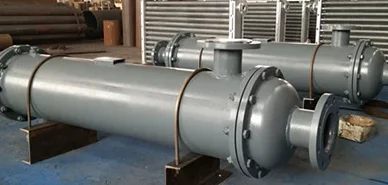
Operating from our state-of-the-art production facilities, we specialize in designing, fabricating, and commissioning custom high-performance industrial evaporators that thrive under extreme operational pressures, violent thermal shifts, and highly corrosive chemical environments.
Backed by over 20 years of experience rooted deeply in precision metallurgy and advanced thermodynamics, our expert engineering team delivers standard-setting configurations—including forced circulation systems, falling film units, and multiple-effect evaporators.
Every custom vessel we produce is meticulously engineered from start to finish to optimize heat flux, minimize fouling, and drastically reduce carbon footprints across complex process plants.
Our complete technical expertise spans demanding global sectors from Oil & Gas to Defence, delivering unmatched reliability where safety cannot be compromised. By pairing meticulous quality control with premium, corrosion-resistant materials, Nordstone builds robust thermal concentration units that exceed structural expectations. Our strict adherence to international safety frameworks—proven by our extensive API, ASME, and ISO certifications—ensures that every piece of processing equipment leaves our shop fully optimized for long-term operational excellence.
To explore specific design configurations or request a technical engineering consultation for your facility, visit our Contact Us page to connect directly with a senior process specialist.
Material Engineering & Structural Certification
Industrial evaporators act fundamentally as specialized pressure vessels handling aggressive fluid dynamics and rapid phase transitions. Depending on your feed streams, our certified facility utilizes advanced alloys to eliminate localized pitting and stress-corrosion cracking (SCC):
- Super Duplex & Duplex Stainless Steels (e.g., UNS S32205, UNS S32750)
- High-Nickel Alloys (Hastelloy C276, Inconel 625)
- Austenitic Stainless Steels (316L, 317L) with low-carbon profiles for weld stability.
| Certification Standard | Regulatory & Operational Relevance |
|---|---|
| ASME Section VIII Div. 1 & 2 | Governs the strict design, manufacturing, and code-stamping (U/U2) of the evaporator units as certified pressure vessels. |
| API Standards | Ensures compliance with rigorous petroleum, petrochemical, and natural gas process requirements. |
| ISO 9001:2015 | Guarantees repeatable quality management systems, complete raw material traceability, and non-destructive testing (NDT). |
Frequently Asked Questions
1. What primary types of industrial evaporators does Nordstone manufacture?
Nordstone designs and manufactures a comprehensive portfolio of thermal concentration units tailored to distinct process requirements. This includes Forced Circulation Evaporators (ideal for high-viscosity, crystal-suspension, or high-fouling fluids), Falling Film Evaporators (engineered for low thermal-residence times and heat-sensitive products), and Multiple-Effect Evaporators (MEE) optimized for maximum steam economy.
2. Why are industrial evaporators classified and manufactured as pressure vessels?
Industrial evaporators routinely operate under extreme deep vacuums (to lower the boiling point of heat-sensitive compounds) or elevated positive pressures. Because a structural failure can lead to catastrophic implosion or explosion hazards, toxic leaks, or severe downtime, they must be strictly designed, inspected, and stamped under pressure vessel codes such as ASME Section VIII.
3. How does Nordstone prevent scaling and fouling in high-concentration solutions?
We mitigate fouling through careful hydraulic and thermodynamic modeling. In our forced circulation systems, we utilize high-flow recirculation pumps to maintain high fluid velocities inside the heat exchanger tubes. This creates high shear rates along the tube walls and suppresses boiling inside the calandria, ensuring that phase transition and crystal precipitation occur only when the fluid flashes inside the separator vessel.
4. Can Nordstone evaporators handle corrosive or acidic feed streams?
Yes. Our facility specializes in processing advanced, corrosion-resistant metallurgy. We routinely fabricate evaporators using Titanium, Hastelloy C276, Super Duplex, and 316L Stainless Steel to guarantee complete chemical compatibility and prevent localized pitting or stress-corrosion cracking caused by chlorides or harsh acids.
5. What industries in Italy benefit from Nordstone industrial concentration solutions?
Our custom systems support heavy processing sectors across Italy and Europe, including Oil & Gas (produced water management, glycol reclamation), Chemical Processing (solvent recovery, salt concentration), Pharmaceutical & Defence (high-purity concentration, specialized waste treatment), and Water Treatment plants aiming for Zero Liquid Discharge (ZLD).
6. What is a Multiple-Effect Evaporator (MEE) system, and how does it save energy?
A Multiple-Effect Evaporator system chains several evaporation stages (“effects”) in series. The live steam provided to the first effect vaporizes the solvent from the feed. The generated vapor is then routed into the shell side of the second effect to act as its heating medium, operating at a lower boiling pressure. By reusing latent heat across 2 to 6+ effects, steam consumption is cut by up to 80% compared to single-effect units.
7. Does Nordstone support Mechanical Vapor Recompression (MVR) integration?
Yes. For facilities looking to minimize thermal energy consumption, we engineer evaporator vessels specifically configured for Mechanical Vapor Recompression (MVR). These units capture the overhead exhaust vapor, compress it mechanically to raise its temperature and energy state, and feed it back into the calandria as the primary heating medium, drastically slashing live steam requirements.
8. How does a falling film evaporator protect heat-sensitive liquids?
In a falling film design, the liquid feed enters from the top of a vertical tube bundle and is evenly distributed to flow down the inner walls as a thin, uniform film. Vaporization occurs rapidly within this thin layer. Because gravity accelerates the liquid down the tube, the product’s residence time on the hot metal surface is reduced to mere seconds, preventing thermal degradation or burning.
9. What testing and non-destructive evaluation (NDE) protocols do you use?
To comply with ASME and ISO quality frameworks, Nordstone performs rigorous non-destructive testing on all pressure boundaries and structural welds. This includes Radiographic Testing (RT/X-ray), Ultrasonic Testing (UT), Liquid Penetrant Testing (PT), Magnetic Particle Testing (MT), and final mandatory Hydrostatic Pressure Testing to confirm total structural containment.
10. Can your systems be designed to achieve Zero Liquid Discharge (ZLD)?
Absolutely. Our industrial concentration evaporators are frequently paired with our heavy-duty industrial crystallizers to form the core of industrial Zero Liquid Discharge (ZLD) infrastructure. The evaporator concentrates wastewater streams to their saturation limits, and the crystallizer drops out solid crystals, leaving zero liquid waste and recovering pure, reusable distillate water.
11. How does Nordstone ensure uniform liquid distribution in falling film systems?
Uniform distribution is vital to avoid dry tubes, which cause immediate product scorching and severe scaling. Nordstone engineers custom-machined distribution plates or spray-nozzle manifolds at the top of the calandria header, ensuring that every individual tube receives an identical, continuous volumetric flow rate.
12. What design documentation does Nordstone provide for regulatory approval in Italy?
We provide complete, transparent technical dossiers required for operational approvals within the European Union and Italy. This includes ASME Manufacturer’s Data Reports (Form U-1/U-2A), CE Marking documentation (conforming to PED 2014/68/EU), welding procedure specifications (WPS), material test reports (MTRs) for raw metal tracking, and comprehensive NDT records.
13. What parameters are required to get an accurate evaporator engineering quote?
To engineer the optimal configuration, our team requires your feed stream’s total flow rate, chemical composition (including pH and chloride levels), initial solid concentration, desired final concentration, available utilities (steam pressure, electricity, cooling water), and target operating temperatures.
14. Do you offer modular, skid-mounted evaporator installations?
Yes. We specialize in assembling fully integrated, skid-mounted modular evaporator units. The heat exchangers, separators, pumps, piping, valves, and PLC-HMI control instruments are entirely built, aligned, and pre-tested within our controlled facility. This minimizes field-welding and installation errors, lowering your site commissioning costs and accelerating project timelines.
15. How do I initiate a design review or consult with Nordstone engineers?
You can easily reach our technical team by visiting our dedicated contact page at Contact Us. Our senior thermal process engineers will schedule a detailed discovery call to evaluate your plant specifications, analyze fluid properties, and outline a tailored, high-performance industrial concentration strategy.