For over three decades, Nordstone has established its position among the premium activated carbon filter manufacturers in Italy, delivering advanced pressure vessels specifically engineered for critical industrial applications.
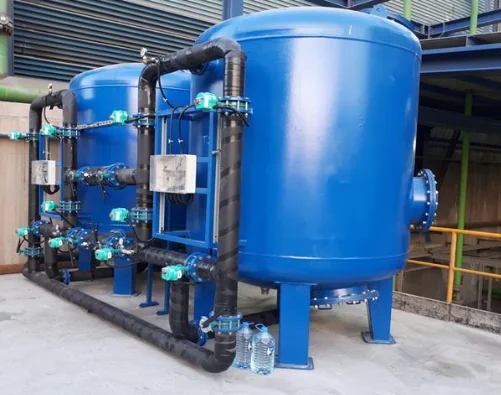
With 20 years of experience in heavy-gauge industrial manufacturing, our precision-engineered granular activated carbon (GAC) filtration systems are custom-built to handle aggressive volatile organic compounds (VOCs), dechlorination, and multi-media purification processes.
Utilizing state-of-the-art automation integrated with high-performance adsorption engineering, every industrial vessel we produce meets stringent PED (Pressure Equipment Directive) requirements.
From safeguarding sensitive downstream reverse osmosis membranes to managing high-temperature petrochemical cleaning circuits, our certified API, ASME, and ISO manufacturing frameworks ensure unmatched physical reliability under extreme operating pressures and heavily corrosive environments.
Frequently Asked Questions
1. What makes Nordstone a premier choice among activated carbon filter manufacturers in Italy?
Nordstone blends over 30 years of industrial design excellence with 20 years of hands-on experience in high-pressure vessel fabrication. Unlike standard assembly shops, we handle the entire engineering process in-house at our state-of-the-art Italian facility. Our pressure vessels are custom-designed to resist extreme temperatures, high internal pressures, and corrosive elements, supported directly by international certifications such as ASME Section VIII, API, and ISO.
2. What types of industrial applications are your activated carbon filters engineered for?
Our industrial vessels serve critical sectors across Europe, including:
- Oil & Gas / Petrochemical: Hydrocarbon removal, amine purification, and process water treating.
- Chemical & Pharmaceutical: Removing organic pollutants, solvents, and biological traces from process streams.
- Defense & Aerospace: High-reliability water purification and specialized chemical containment.
- Electronics & Semiconductor: Dechlorination to shield sensitive reverse osmosis (RO) systems. www.eurowater.com
3. Which construction materials do you use for your carbon filter pressure vessels?
We specialize in heavy-duty, corrosion-resistant metals. Depending on your operational environment, we build filters using Stainless Steel 316L, custom carbon steels with protective chemical linings, or advanced super alloys. These materials guarantee that your vessel will withstand harsh cleaning chemicals, caustics, and thermal variations without risking structural integrity.
4. Are Nordstone’s activated carbon filters compliant with European pressure equipment directives?
Yes. Every pressure vessel meant for the Italian and European markets is completely engineered, inspected, and stamped in full compliance with the European PED (Pressure Equipment Directive) 2014/68/EU, along with ASME Section VIII design rules.
5. What internal engineering features prevent media migration within the filter?
Our activated carbon filters feature a heavy, precision-perforated internal plate that supports the media bed. On top of this plate, we fit custom-engineered, non-clogging distribution nozzles. These nozzles ensure a uniform flow of water or gas during processing while strictly preventing granular activated carbon from leaking into downstream lines during backwashing.
6. How do you optimize empty bed contact time (EBCT) in your vessel designs?
Our engineering team calculates the vessel’s height, diameter, and bed depth based on your specific flow rates and influent chemistry. For industrial cleaning or organic adsorption loops, we typically target an optimal EBCT of 8 to 15 minutes to ensure complete contaminant adsorption.
7. Do your filtration systems support fully automated backwashing?
Yes. Our vessels come equipped with integrated service pipework, pneumatic valves, differential pressure gauges, and a dedicated PLC-controlled automation system. When the differential pressure across the carbon bed reaches a pre-set threshold, the system automatically runs an air-and-water backwash cycle to clear trapped particles and redistribute the carbon bed.
8. What types of contaminants can your activated carbon vessels successfully remove?
Our systems are highly efficient at adsorbing:
- Free chlorine, chloramines, and chlorine dioxide. www.eurowater.com
- Volatile Organic Compounds (VOCs) and industrial solvents. www.gammaimpianti.com
- Per- and polyfluoroalkyl substances (PFAS).
- Phenols, surfactants, detergents, and hydrocarbon residues.
- Unpleasant industrial odors and color compounds.
9. Can your carbon filters manage high-temperature industrial fluid circuits?
Yes. While standard carbon adsorption capacities drop at high temperatures, our mechanical engineering accounts for these thermal stresses. Our vessels can be rated for elevated process fluid streams (ranging from 40°C to 80°C) by pairing specialized internal coatings or raw Stainless Steel 316L with optimized carbon media selection.
10. How long does the activated carbon media typically last inside your industrial vessels?
Depending on your internal organic loading, chemical concentrations, and operational cycle times, the carbon media generally lasts between 6 to 18 months. Systems monitoring Total Organic Carbon (TOC) or breakthrough indicators will signal precisely when the media is spent.
11. Does Nordstone assist with custom design modifications?
Customization is our primary strength. We tailor everything from physical footprint limitations (vertical or horizontal vessel layouts) and nozzle configurations to manual or fully automatic PLC setups. Our engineering team designs solutions around your exact processing specifications.
12. How do your filters protect downstream Reverse Osmosis (RO) plants?
Free chlorine and oxidants degrade and cause irreversible membrane damage to RO systems. Our carbon filters act as a protective polish, stripping free chlorine and chloramines down to under 0.1 ppm, extending the operational lifespan of your downstream purification assets.
13. What maintenance features are built into your pressure vessels?
To ensure safe and rapid servicing, all our vessels are built with strategically placed, code-compliant manholes for media loading/unloading, visual inspection windows, and dedicated drainage ports. This structural layout minimizes operational downtime during spent carbon extraction and fresh media refills.
14. What quality control documentation do you provide upon project completion?
We provide a comprehensive quality assurance packet with every industrial vessel delivered. This includes material test reports (MTRs), weld maps, NDT (Non-Destructive Testing) records, hydrostatic test certificates, design calculations (for contact times and pressure limits), and copies of your ASME or PED certificates.
15. How do I get a custom technical evaluation or quote for an Italian project?
You can collaborate directly with our industrial design engineers. Please share your project flow rates, target contaminants, and pressure requirements through our official portal so we can generate a personalized technical proposal.
Partner With Nordstone
Ready to optimize your industrial filtration process with built-to-last Italian engineering? Reach out to our technical engineering division to map out your custom vessel specifications: