As a premier choice among TSand Filter Pressure Vessel manufacturers in Italy, Nordstone combines over 20 years of technical expertise with advanced thermodynamic engineering to design and fabricate industrial filtration systems capable of managing extreme mechanical stresses.
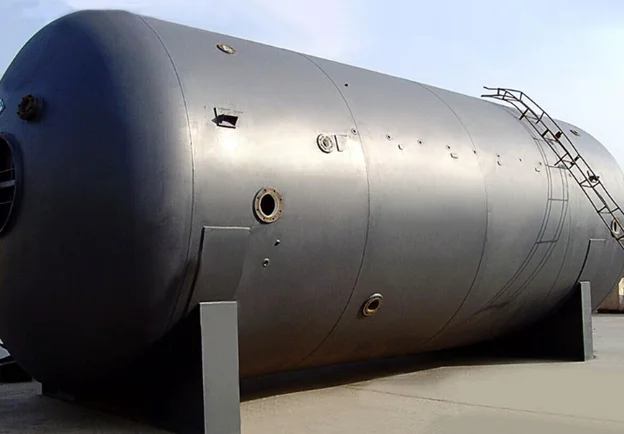
Our custom-engineered TSand (Turnkey Sand) filter vessels provide high-efficiency particulate and suspended solids removal across deep-bed filtration layouts, making them essential for critical water treatment, petrochemical processing, and heavy industrial applications.
Engineered to withstand harsh operational variables, high flow rates, and aggressive chemical environments, each vessel is manufactured in strict compliance with the European Pressure Equipment Directive (PED) 2014/68/EU, as well as international ASME Section VIII Div. 1 & Div. 2 and API design codes.
By utilizing state-of-the-art computational fluid dynamics (CFD) to optimize internal fluid distribution and backwash economics, we ensure that Italian industrial facilities receive highly reliable, low-maintenance filtration systems that guarantee process continuity and complete structural integrity over decades of continuous operation.
To explore custom engineering specifications, structural material grading, or to request a detailed technical quotation for your upcoming project, please visit our dedicated contact page.
Frequently Asked Questions (FAQ)
1. What design codes govern TSand Filter Pressure Vessels manufactured for the Italian market?
All vessels built for installation in Italy must strictly comply with the Pressure Equipment Directive (PED) 2014/68/EU, carrying the required CE marking. To accommodate global engineering standards or specific multinational project requirements within Italy, Nordstone co-designs and certifies these vessels under ASME Section VIII Division 1 or Division 2 and API 12J frameworks, verified via independent notified bodies (such as TÜV, Bureau Veritas, or Lloyd’s Register).
2. Which material grades do you utilize to resist corrosion in sand filter vessels?
Depending on fluid chemistry and salinity levels, we manufacture sand filters utilizing:
- Carbon Steel: SA516 Grade 60/70 (typically outfitted with high-performance internal chemical/epoxy linings).
- Stainless Steel: Austenitic grades like SS304L, SS316L, and SS904L for superior oxidation resistance.
- Advanced Alloys: Duplex (UNS S32205) and Super Duplex (UNS S32750) steel, or exotic nickel alloys (Hastelloy, Inconel) for severe or hypersaline desalination applications.
3. How does Nordstone prevent internal corrosion from abrasive filter media and aggressive process water?
For carbon steel TSand vessels, we apply specialized, thick-film protective linings. These include glass-flake reinforced epoxies, vulcanized rubber linings, and phenolic epoxy coatings. These barriers isolate the raw metal from constant contact with abrasive silica sand, gravel, and chemical coagulants, eliminating localized pitting and extending operational lifespans beyond 20 years.
4. What internal distribution architectures are available for your TSand filters?
To guarantee uniform velocity profiles across the media bed and prevent fluid channeling, we integrate precision-engineered internal structures:
- Top Distribution: Deflector plates, splash cups, or multi-header lateral assemblies for even inlet flow.
- Bottom Underdrain Systems: Header-lateral pipe configurations, hub-lateral systems, or false-bottom nozzle plates equipped with high-precision slot-width polypropylene or stainless steel wedge-wire nozzles.
5. What are the maximum pressure and temperature limits for your custom-built filter vessels?
Our state-of-the-art manufacturing infrastructure allows us to build custom pressure vessels engineered for pressures ranging from full vacuum up to 100+ bar, and operating temperature limits from -50°C to +400°C. Every filter vessel’s wall thickness (typically spanning 5 mm to 60 mm) is precision-calculated with a dedicated corrosion allowance (1 mm to 3 mm) to match your specific system data sheet.
6. Can Nordstone accommodate custom dimensional configurations for restricted footprint facilities in Italy?
Yes. We specialize in custom-engineered industrial solutions. Our design team can modify vessel configurations into vertical or horizontal orientations, optimize shell diameters, alter nozzle locations, and design custom support skirts or saddles to seamlessly drop into tightly constrained existing footprints or modular skid assemblies.
7. How does your design optimize the backwash cycle efficiency?
Using advanced flow simulation modeling, we carefully design the internal freeboard space (expansion volume) above the sand bed—typically allowing for 30% to 50% bed expansion. This prevents media carryover during high-velocity backwash cycles while ensuring uniform fluidization, removing trapped particulates with minimal water consumption.
8. What Non-Destructive Testing (NDT) operations are performed on the pressure vessel welds?
Quality control is foundational to our process. We perform comprehensive, in-house NDT operations to guarantee total weld integrity, including:
- Radiographic Testing (RT) and Ultrasonic Testing (UT) for full volumetric examination of longitudinal and circumferential seams.
- Magnetic Particle Testing (MPI) and Dye Penetrant Testing (DPT) for surface defect detection.
- Final validation via compulsory Hydrostatic Pressure Testing (typically at 1.3× or 1.43× the design pressure limit).
9. Do your filter vessels support automated multi-valve manifold integrations?
Absolutely. We build both standalone vessels and fully integrated, skid-mounted automated filtration packages. Vessels can be delivered pre-piped with pneumatic or electric-actuated butterfly or ball valve manifolds, differential pressure transmitters, and centralized PLC/SCADA-compatible control panels for hands-free backwashing.
10. What is the typical slot tolerance for the filter nozzles used inside the vessel?
Our standard stainless steel wedge-wire underdrain nozzles feature precision slot openings ranging from 0.2 mm to 0.5 mm. This sizing is meticulously matched to the effective grain size of your specific filtration sand or anthracite selection, preventing media migration into the clean water stream without creating excessive differential pressure drops.
11. How do you ensure safety during maintenance and sand replacement routines?
Every pressure vessel is equipped with strategically placed, code-compliant manways (typically DN500 / DN600) on the top shell for media loading and side/bottom shells for media extraction. They also feature dedicated air-release vents, safety relief valve connections, vacuum breakers to prevent structural implosions during rapid draining, and heavy-duty lifting lugs for secure installation handling.
12. Are Nordstone vessels suitable for offshore oil & gas production platforms or maritime environments?
Yes. With an extensive engineering footprint in sectors like Oil & Gas and Defence, we build vessels customized for marine environments. This includes the use of sea-water resistant Super Duplex alloys, specialized multi-coat offshore polyurethane exterior paint systems (C5-M standard), and custom cyclic/seismic structural calculations for wave-induced motion stresses.
13. What is the typical lead time for a custom TSand filter vessel delivered to Italy?
Lead times vary depending on structural complexity, material availability (e.g., standard carbon steel vs. exotic alloys), and third-party notified body scheduling. Generally, engineering design approval and fabrication take between 12 to 24 weeks. We provide transparent milestones, from initial finite element analysis (FEA) to final transport delivery.
14. Do your vessels comply with local Italian environmental and sustainability targets?
Yes. Our manufacturing facilities utilize strict quality assurance workflows optimized for resource efficiency. By implementing high-efficiency internal flow geometries that decrease backwash frequency and water volume consumption, our TSand filters actively minimize operational carbon footprints and waste streams for Italian industrial plants.
15. How do I initiate a request for quotation (RFQ) with your engineering team?
To provide an accurate technical and commercial proposal, our engineering team requires details regarding your process design conditions. This includes maximum operating pressure/temperature, flow rate, fluid chemistry (or TDS/chloride levels), raw water particle load, and your preferred building codes (PED or ASME).
Please submit your data sheets or project design specifications directly through our secure industrial contact gateway to receive a comprehensive engineering review.