As an established leader in high-performance industrial engineering, Nordstone brings over 20 years of experience to the design, fabrication, and delivery of highly specialized heavy industrial equipment.
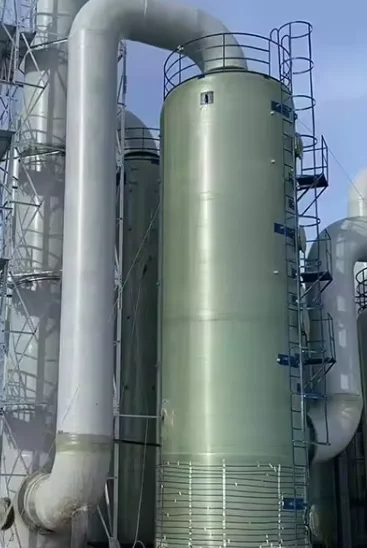
Recognized among the premier absorber column manufacturers in Italy, we engineer custom gas-liquid mass transfer towers tailored to manage volatile organic compounds (VOCs), acid gas scrubbing, and amine sweetening under extreme conditions. Our heavy-duty industrial columns are purposefully built to optimize gas processing efficiency across the oil & gas, chemical, petrochemical, and defense sectors throughout southern Europe.
Operating from our state-of-the-art production facility, Nordstone’s team of veteran engineers integrates cutting-edge computational fluid dynamics (CFD) with precision metallurgy. This approach allows us to manufacture custom vertical pressure vessels capable of withstanding severe corrosive environments, ultra-high temperatures, and high operational pressures.
Every industrial column we build strictly complies with internationally recognized quality benchmarks. Backed by rigorous quality control and code-stamped API, ASME (Section VIII Div. 1), and ISO certifications, we guarantee absolute operational safety, high structural integrity, and prolonged service lifespans for Italy’s most demanding process plants.
To discuss your facility’s customized specifications, scale calculations, or alloy requirements with our technical team, visit our Contact Us page.
Frequently Asked Questions
1. What industrial applications do Nordstone absorber columns serve in Italy?
Nordstone absorber columns are primarily deployed across Italian refining, petrochemical, and chemical manufacturing sectors. Key applications include:
- Amine sweetening for the selective removal of hydrogen sulfide (H2S) and carbon dioxide (CO2).
- Glycol dehydration systems for absorbing water vapor from natural gas streams.
- VOC recovery and industrial acid gas scrubbing to maintain compliance with strict European environmental regulations.
2. What certifications back Nordstone’s absorber column manufacturing?
Our fabrication processes are thoroughly validated by world-recognized quality management systems and pressure vessel codes. We hold active certifications for ASME Section VIII Division 1, API standards, and ISO compliance. For equipment intended for use within Italy and the broader European Economic Area (EEA), we deliver products fully compliant with the Pressure Equipment Directive (PED).
3. Which construction materials do you utilize for corrosive environments?
Material selection depends entirely on the chemical composition of your gas and solvent streams. We work with:
- Heavy-duty carbon steel (with tailored corrosion allowances for standard hydrocarbon applications).
- High-grade stainless steels (304L, 316L) to prevent pitting from sour gases.
- Exotic alloys and cladded materials—such as Duplex, Super Duplex, Hastelloy, and Titanium—for highly aggressive chemical processing environments. nordstoneng.com
4. Does Nordstone offer both packed and tray absorber column designs?
Yes. We custom engineer both major configurations depending on your specific hydraulic and process needs:
- Packed Columns: Utilizing structured or random packing to achieve a low pressure drop and high mass-transfer efficiency. nordstonein.com
- Tray Columns: Utilizing valve, sieve, or bubble-cap trays, which are highly effective for high liquid flow rates or processes prone to fouling and scaling. nordstonein.com
5. How does an absorber column operate within a gas-liquid mass transfer system?
The operating principle relies on countercurrent contact. The unrefined gas stream enters the bottom of the vertical tower and flows upward. Meanwhile, a lean solvent (liquid phase) is introduced via a distributor at the top and flows downward. Mass transfer occurs across the internals, dissolving the target gas components into the liquid. The cleaned gas exits the overhead line, while the loaded rich solvent exits through the bottom outlet for regeneration.
6. Can you manufacture custom custom columns for existing Italian facilities?
Absolutely. With 20 years of experience, we specialize in building brownfield retrofits and custom tailored vessels. Our engineering team designs the column’s diameter, height, nozzle configurations, and support structures to align seamlessly with your existing footprint and piping infrastructure.
7. What testing and quality control measures do you apply during production?
Every single absorber column undergoes a comprehensive quality assurance protocol before it leaves our facility. This includes non-destructive testing (NDT) such as:
- Radiographic testing (RT) of welded joints.
- Ultrasonic testing (UT) and magnetic particle testing (MT).
- Final hydrostatic pressure testing to ensure structural integrity well beyond maximum allowable working pressures (MAWP). nordstoneng.com
8. How do you optimize liquid distribution inside your vertical towers?
Proper liquid distribution is critical to prevent channeling and ensure uniform wetting of column packing. Nordstone designs custom high-precision liquid distributors and spray headers engineered to match the targeted liquid-to-gas (L/G) ratios of your specific application.
9. What is the typical lead time for an ASME-certified absorber column?
Lead times vary depending on column dimensions, raw material availability (especially for exotic alloys), and engineering complexity. Generally, process columns take between 24 to 36 weeks from final mechanical design approval to delivery. We provide transparent schedules and milestone updates throughout the project lifecycle.
10. Do you provide complete documentation for Italian regulatory bodies?
Yes. Every vessel is delivered with a comprehensive Manufacturer’s Data Report. This turnkey documentation packet includes material test reports (MTRs), welding logs, NDT records, PED certificates of conformity, hydrostatic test charts, and approved mechanical drawings.
11. How do Nordstone columns handle high-pressure or high-temperature limits?
During the design phase, our engineers calculate the precise shell thickness and reinforcement requirements utilizing advanced finite element analysis (FEA). By selecting premium-grade materials and utilizing advanced thick-wall fabrication methods, our vessels operate reliably under extreme pressure spikes and thermal cycling.
12. Are your column internals removable for routine maintenance?
Yes. We design our columns with strategically placed manways, body flanges, and internal support rings. This allows plant operators to easily access, remove, clean, or replace internal components like packing beds, trays, and mist eliminators during scheduled plant turnarounds.
13. What steps do you take to prevent foaming inside the absorber?
Foaming can severely disrupt mass transfer and cause liquid carryover. We counteract this by optimizing the column’s internal hydraulics, designing generous vapor-disengagement zones at the top, and integrating highly efficient demister pads (mist eliminators) to trap entrained liquid droplets before the gas exits overhead.
14. Do you offer global shipping and transport coordination to Italy?
Yes. Nordstone handles complex logistics for extra-large and heavy industrial equipment. We manage the entire transportation process—including specialized heavy-haul trucking, permits for oversized cargo, and ocean freight logistics—ensuring your column arrives safely at your site in Italy.
15. How can I request a technical quote for an absorber column?
The most efficient way to start your project is to share your process design data sheet with us through our Contact Us page. Please include your target gas compositions, volumetric flow rates, temperature/pressure profiles, preferred solvent characteristics, and required design codes. Our technical sales engineers will review the criteria to build a comprehensive proposal.