Leading Industrial Condenser Manufacturers in Italy: Custom Engineering by Nordstone
For over 20 years, Nordstone has established itself as an elite choice among premium condenser manufacturers in Italy, delivering custom-engineered thermal management solutions for highly critical industrial frameworks.
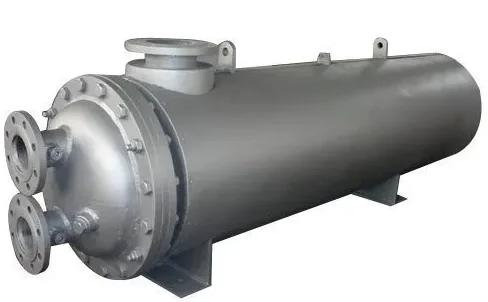
Operating from our advanced, state-of-the-art production facilities, our expert engineering team specializes in the comprehensive design, structural calculation, and heavy-duty manufacturing of custom industrial condensers capable of enduring ultra-high pressures, thermal shocks, and aggressive corrosive chemical environments.
As a certified global manufacturer with a deep presence across the Italian industrial corridor—from Lombardy’s manufacturing hubs to Mediterranean oil and gas facilities—we leverage proprietary thermal modeling software to develop shell and tube condensers, steam condensers, and sulfur condensers tailored to your distinct operational metrics. Whether your facility operates within the specialized sectors of Oil & Gas, heavy chemical processing, power generation, or high-security Defence installations, our solutions are built to minimize downtime and maximize heat-transfer efficiency.
Our long track record of manufacturing triumphs is backed by complete compliance with national and international codes, including strict adherence to API, ASME, and ISO criteria. From initial thermodynamic design and material procurement of exotic alloys to exhaustive non-destructive testing (NDT), Nordstone maintains rigorous, end-to-end quality control to ensure total process safety.
To discuss your facility’s thermal parameters, design blueprints, or compliance specifications with our engineering desk, visit our main communication hub to contact us directly.
Top 15 Technical & Procurement FAQs
Here are the most vital operational, compliance, and design questions handled by our Italian engineering and procurement teams:
1. What mechanical design codes does Nordstone follow for industrial condensers manufactured for Italy?
We design and manufacture all industrial condensers in strict compliance with international and European regulatory frameworks. This includes ASME Section VIII Division 1 & 2, API 660, TEMA (Tubular Exchanger Manufacturers Association) Standards (Class R, C, and B), and the European PED (Pressure Equipment Directive) 2014/68/EU, ensuring absolute safety and structural legality for operation within Italy.
2. Can Nordstone provide custom thermal and structural calculations for Italian infrastructure projects?
Yes. Our in-house engineering team executes precise thermodynamic modeling using industry-standard software like HTRI, coupled with Finite Element Analysis (FEA) for mechanical and structural integrity checks. We supply complete calculation dossiers to client inspectors and third-party notified bodies across Italy.
3. Which specialized alloys do you use to counter high corrosion in marine or chemical process environments?
To withstand extreme corrosion, high temperatures, and localized pitting, we process a broad spectrum of high-grade materials, including:
- Austenitic Stainless Steels (316L, 304L)
- Duplex and Super Duplex Stainless Steels
- Titanium and Copper-Nickel Alloys (CuNi 90/10, 70/30)
- Nickel Alloys (Inconel, Hastelloy, Monel)
4. How does Nordstone ensure compliance with Italy’s strict environmental and safety regulations?
Every unit built for the Italian market undergoes thorough environmental and quality auditing. Our production processes align with ISO 9001 (Quality Management), ISO 14001 (Environmental Management), and ISO 45001 (Occupational Health & Safety). Furthermore, our systems are structured to minimize volatile emissions, ensuring your plant complies with local Legislative Decrees (such as D.Lgs. 152/06).
5. What types of industrial condensers do you manufacture for critical applications?
Our 20 years of manufacturing experience covers a comprehensive range of industrial configurations:
- Shell and Tube Condensers: The standard for high-pressure oil, gas, and petrochemical processes.
- Surface Steam Condensers: Optimized for thermal power generation and turbine exhaust systems.
- Refinery Sulfur Condensers: Custom-lined units engineered specifically for demanding Claus sulfur recovery units.
6. Do you accommodate external, third-party inspection agencies at your production facilities?
Absolutely. We routinely host prominent international and local third-party inspection organizations chosen by our clients—such as Bureau Veritas, TÜV, Lloyd’s Register, and RINA—to witness hydro-testing, verify material heat numbers, and audit non-destructive testing (NDT) results before dispatch to Italy.
7. What specific Non-Destructive Testing (NDT) protocols are performed on Nordstone vessels?
To ensure the integrity of every welded joint and pressure-retaining component, our certified Level II/III technicians conduct comprehensive NDT testing including:
- Radiographic Testing (RT) and Ultrasonic Testing (UT)
- Liquid Penetrant Testing (PT) and Magnetic Particle Testing (MT)
- Positive Material Identification (PMI) to verify alloy chemical compositions
- High-pressure hydrostatic testing up to client-specified safety design limits
8. How does Nordstone optimize heat transfer efficiency while minimizing fouling in industrial condensers?
Our thermal engineers optimize tube bundle layouts, choose exact tube diameters, and vary pitch configurations based on your fluid velocity and thermal profile. We implement custom baffling setups to eliminate stagnant zones, maximize the heat transfer coefficient (U), and significantly reduce fouling rates over long operational lifecycles.
9. Can you manufacture exact replacement tube bundles for existing third-party condensers in Italy?
Yes. If your current condenser shell remains structurally sound but the internal tubes have suffered thermal wear or corrosion, we can reverse-engineer or utilize original drawings to manufacture direct-replacement tube bundles, minimizing your facility’s turnaround times.
10. What documentation is delivered alongside a Nordstone industrial condenser?
We provide a comprehensive, transparent technical manufacturing data book (MDB) containing:
- Certified material test reports (MTRs / EN 10204 3.1 or 3.2 certifications)
- Complete welding documentation (WPS, PQR, and WPQ records)
- NDT inspection reports and post-weld heat treatment (PWHT) charts
- Hydro-test certificates and PED Declaration of Conformity
11. Do your industrial condensers support explosive or hazardous atmospheres (ATEX zones)?
Yes. For installations across chemical, oil, and gas zones in Italy requiring strict ATEX compliance, all electrical components attached to our packages—such as instruments, control valves, or grounding elements—are certified for use in specified hazardous zones (Zone 1 or Zone 2).
12. What is your typical manufacturing lead time for an ASME or PED certified custom condenser?
Lead times vary depending on the geometric complexity, size, and specific metallurgy required. Standard custom carbon steel or basic stainless steel units typically range from 20 to 26 weeks, while units utilizing exotic alloys (like Titanium or Hastelloy) are subject to material mill availability. We provide firm, transparent delivery timelines at the quotation stage.
13. How are Nordstone vessels packaged to ensure safe transit to industrial sites across Italy?
Given the precision of condenser tube sheets and flange faces, all units undergo rigorous export packaging. Flange faces are securely sealed with heavy-duty blanks, tube bundles are stabilized against transit vibrations, and the entire unit is mounted on custom heavy steel saddles or crating built for safe maritime or overland freight.
14. Do your engineering designs account for localized seismic and wind loading criteria in Italy?
Yes, all structural calculations for supports, saddles, and anchor bolts are customized based on the exact geographical coordinate installation site within Italy. We factor in local seismic parameters (via NTC 2018 standards) and localized wind loading data to guarantee absolute mechanical stability.
15. How can our procurement or engineering department initiate a technical request for quotation (RFQ)?
You can securely transmit your process datasheets, thermal requirements, and architectural drawing constraints straight to our estimation desk. Simply visit our centralized portal to contact us and submit your project specification files; a technical sales engineer will respond within 48 business hours.